


After a very long and hot Summer, it looks like Autumn is finally here. With businesses in full swing after the summer, there have been some interesting financial developments.
French financial update October 2026
By Katriona Murray-Platon
This article is published on: 5th October 2026

One of the products we advise our clients to invest in when moving to France is an assurance vie. Its popularity is clear and the amount invested in assurance vies has steadily increased since they were created 40 years ago, reaching € 2162 billion in June 2026 (a 6% increase from last year).
By the end of 2025, over half of French household savings were invested in assurance vies – far more than in savings accounts such as the Livret A or LDDS.
This is hardly surprising given the strict limits of these accounts on both the capital (€22,950 for a Livret A and €12,000 for a LDDS) and the fact that savers can only have one of these accounts each, whereas there is no limit to the number of assurance vies a person can have or on the amount invested. If the assurance vie is set up before age 70, the IHT allowance is €152,500 per beneficiary per policy holder (having multiple assurance vies does not increase this amount). According to a 2025 report from the federation France Assureurs, 46% of savers chose this investment for inheritance planning and 44% as their preferred method of saving money.

Average mortgage rates in France have increased since September, currently sitting at around 3.5% depending on the length of the loan. This is due to the fact that the French state’s 10-year borrowing rate has reached 4.2%, its highest level since 2004, and the rise in inflation which increased to 2.4% in August, from 2.1% in July, and 1.8% in June.
The European Central Bank also increased its rates by 0.25 points on 10th September with more increases expected by the end of the year.
Furnished rental property owners using Airbnb under the micro-BIC regime face tighter margins. For “non classé” properties it will be more difficult to remain under the €15,000 threshold. Under the Le Meur law (and contrary to the other thresholds for other types of rental), this threshold has not been adjusted to take into consideration the rise in inflation. Furthermore, from 13th October AirBnB’s pricing policy will change such that the rate of 15% will be paid by the host (rather than being split with the guest). For example, for a rental at €100 per night, instead of receiving €97, the host will only receive €84,50 whereas the guest will pay €100 instead of €115. AirBnB hosts should therefore adjust their prices ahead of this deadline and be aware of the likely impact on their taxable income. This will not affect those that are already under the ‘reel’ or costs-based system.
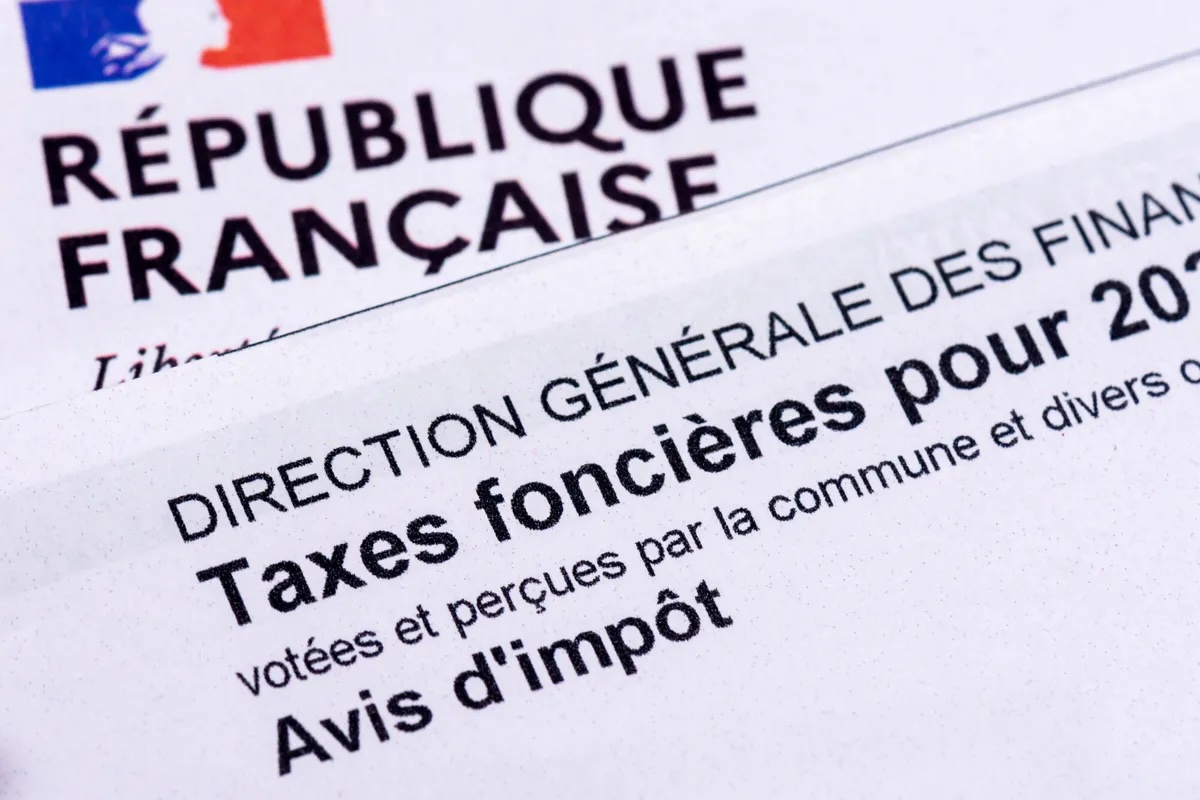
The Taxe Foncière must be paid by 15th October (20th October for online payments). If you pay your Taxe Foncière in one go in October, it will be taken automatically on 15th October.
If you already pay monthly then the payment on 15th October will be the same as the previous payments and the payment on 15th November will be the balance due for any increases.
Taxe Foncière must be paid by the owner of the property as at 1st January. If you have purchased a property during the year, the notaire will have split the amount pro-rata with the seller meaning that the Taxe Foncière bill won’t appear in your account until next year. If you sold a property in 2026, this will be the last time you pay Taxe Foncière for that property.
On a brighter economic note, both the US and Eurozone economies are performing well. In the US the flash composite Purchasing Managers’ Index (PMI) hit 58.4 this month (up from 56.0 in August)—the fastest pace of expansion since 2015 outside of the post-lockdown reopening surge, with both manufacturing and services performing strongly. In Europe, S&P Global’s composite PMI rose to 53.1 in September 2026 (up from 52.0 in August), marking three consecutive months of accelerating business activity and reaching a three-and-a-half-year high. Notably, Germany expanded for a third straight month, and France returned to economic growth for the first time in 10 months. While new orders and employment are rising, inflationary pressures have intensified slightly (with input and output prices rising at their fastest rates in four months), and business confidence remains relatively subdued.
After a quieter summer, it has been wonderful to reconnect with clients and contacts I spoke with earlier in the year. If you would like to discuss your personal financial situation or planning goals, please get in touch to arrange a meeting.