


Buying property – the alternative options
By Peter Brooke
This article is published on: 10th September 2014

Having a real estate investment is often an excellent decision for any investor, but many don’t have the ability to own a complete house or apartment. They may not have enough capital to buy the property outright, fund a deposit or receive enough income to be able to afford a loan.
For crew, it also can be difficult to get a mortgage due to the offshore nature of their income, though it is possible in some countries. So what other options might there be for having invested capital in the various property markets around the world?
Collective Investment Schemes:
There are many mutual funds that invest into bricks and mortar. Most of these buy into commercial property in developed markets, such as the UK or Europe. They are managed by professional managers and diversify across several commercial sectors, such as office buildings, retail stores (split between “out-of-town” and “high street”) and industrial complexes. They also always hold a portion of the portfolio in cash and property equities, i.e., the quoted shares of building contractors and the like. The cash and shares are to maintain liquidity so funds are available to investors who need to make a withdrawal without selling huge office blocks. The legal structure of property funds is very important to watch. During the financial crisis, several offshore funds (domiciled in the likes of the BVI and Cayman Islands) suspended and have since begun to liquidate, losing many investors their money; some are still suspended. At the same time, there were no UK authorized property funds that suspended.
Fractional ownership:
Although this term has broadened in the last decade, it basically means owning parts of a property. It tends to be most popular in the residential sector and can cover the entire range of property, from distressed sales and repossessions to luxury property clubs. You’re the legal owner of a share in the property; therefore, your name will appear on the deed and you share in the property’s costs and profits and are legally liable. One unique system available is to own “bricks” of property. This is when a company buys real estate at a discount, renovates if necessary and then sells “bricks” for a proportional price. This system allows an investor to own many bricks in many different properties, thereby hugely diversifying their property exposure. Their share of the rent is paid to them (after any management costs), and they can sell their bricks on a specially designed marketplace. An example of a market maker in this sector would be ownbrix.com.
When buying real estate, it’s wise to understand all the legal and tax implications of owning it, as it’s physically located in a jurisdiction and liable to the taxes in that location. If in any doubt, get advice.
How to protect yourself in uncertain times
By Spectrum IFA
This article is published on: 15th August 2014
Wealthy individuals have a lot more in common than just their wealth. Ambition, skill, patience, consistency and a strategic game plan are all vital to ensure success. Keeping an eye on the end goal and never giving up have been key to reaching greater heights.
Only a minority of the population become extremely rich, as the likes of Warren Buffet, Richard Branson or Paul Getty, but this does not mean that we can’t enjoy a comfortable lifestyle with luxuries and freedom.
World stock market performances over the last 60 years reveal that the enduring trend is up and it is evident that any sharp downward movements often coincided with world calamities. Even with the peaks and valleys, stock market performance over time still yields inflation-beating returns for those who remain loyal.
Despite this, investors are concerned about the fluctuating Gold price and negative impact of the mining and metal strikes in South Africa and the developing Russian/Ukraine crisis which is already a cause for alarm – Russia is now talking of disallowing air travel over its skies to the East thus hampering tourism, the lifeblood for many of the Asian Tiger’s economies.
Hearing the words ‘hang in there’ is not enough reassurance for those trying to save for retirement or financial independence. This in turn affects investors who feel the pinch whether it be through investment of stocks directly through their own portfolio comprising retirement annuities, pension plans, QROPS, unit trusts or any other long term investment products which are exposed to the share market.
The critical questions is …
“How you manage your income and investments to shield against market volatility?”
Well, there are basically two main strategies that need to be developed in order to provide an effective buffer against economic turmoil.
The first is effective management of income and the second is a well-structured investment strategy.
Effective Money Management
It is little wonder that rising interest rates cause such widespread concern when so many people and businesses are exposed to excessive debt. If you take an average small- to medium-size business owner, they will probably have an overdraft, two car leases, a home mortgage and perhaps credit card debt. In anyone’s book, this results in a big chunk of money to repay before the school fees have been paid or the life policy has been covered.
The first step to minimising the effects in uncertain economic times is to reduce debt. If you don’t have excessive debt, the impact of rising interest rates on your pocket will be negligible and it’s worth bearing in mind that if you have cash reserves, the higher rate will benefit you greatly.
Well-structured investment strategy
The consensus amongst investment experts is to advise individuals to construct an investment portfolio in order to take advantage of long term trends. If the long term structure of an investment portfolio is healthy, short term storms can be weathered.
The first defence against any volatility in the markets is diversification. What this means, is that investors need to ensure that their investment portfolio is structured in such a way that they have investments in different asset classes such as cash, bonds, property and equities.
Uncertainty and volatility are intrinsic to investment markets. For this reason, investment should be viewed as simply a means to having enough money to live the lifestyle that you would like to live.
An investment portfolio should remain unchanged during times of volatility, unless the factors upon which the construction process was based have changed.
Investors should not change a long term game plan based on short term volatility. Attempting to time the market based on short term movements only increases portfolio risk.
The best way to protect yourself from market volatility is to first reduce your risk, which can be achieved by reducing debt. By doing this, you will have a lot less to worry about if inflation forces interest rates up.
The next step is to ensure that your investment strategy has a long term view and a financial planner will be your best resource when setting up a long term portfolio.
If you realise from the above the importance of seeking proper professional financial advice involving risk classification and correct diversification, why not give me a call in order to facilitate a meeting where we can do this.
Precious metals and gold
By Spectrum IFA
This article is published on: 30th July 2014
Which of these has more value? Is there something better?
 |
 |
When it comes to hedging (protecting) against dollar debasement, few things have performed as well as gold. Having gold or unit trust gold funds could be said to be “preparing for the worst.”
Following the fairly recent global financial crisis, governments have adopted expansionary monetary policies by cutting interest rates and increasing the amount of money in circulation to keep their banks and indebted borrowers afloat. Even though the historical case for gold is strong and the price goes up, the raw supply and demand case for platinum and palladium might be even stronger.
Russia and South Africa currently hold 80% of the world’s platinum and palladium reserves and both are struggling to maintain output. In fact, global supply is becoming increasingly less as production declines in these two politically volatile countries. Strikes in South Africa have resulted in the loss of 550,000 ounces (14,174,761 grams) worth of production in the first quarter of this year. And the tensions along the Ukraine border threaten to trigger huge disruption in markets in Russia.
This instability in South Africa and Russia all but ensures that the platinum and palladium markets will see yet another supply deficit in 2014.

Regardless, demand continues to increase and is unlikely to come down soon. Primarily, these metals are used in catalytic converters, the mechanism in your car’s engine that helps reduce noxious gas output and helps to keep the air cleaner. As more and more cars hit the roads – particularly in developing nations – the demand for cleaner air looks set only to rise.
Do you have gold shares in your investment portfolio? Or Uranium or Platinum? Now is the time to look at exactly what assets make up your portfolio. After all, I am sure you want to cover all bases.
———————————————————————————————-
“The best time to invest is when you have money.
This is because history suggests it is not timing which matters, but time”
Sir John Templeton
As safe as money in the bank
By Spectrum IFA
This article is published on: 24th July 2014
More than a fifth of UK citizens think that the best long-term investment is putting their money in the bank. This is the rather discouraging result of a July survey by Bankrate.
One of its questions was, “For money you wouldn’t need for more than 5 years, which one of the following do you think would be the best way to invest your money?”
- 26% – cash
- 23% – real estate
- 16% – precious metals
- 14% – stock market
- 8% – bonds
That thumping sound you hear is me banging my head on my desk!!
I assume those who opted for cash did so because keeping money in the bank seemed to be the safest choice.
However, for long-term investing, that safety is an illusion. The best and safest place to put your nest egg for the future is not in the bank, but in a well-diversified portfolio with a variety of asset classes. And here’s why:
Savings accounts and CDs are safe places to store relatively small amounts of cash that you expect to need within the next few months. The funds are protected by insurance. You know exactly where your money is, and you can get your hands on it anytime you want.
This short-term safety does not make the bank a good place for the money you will need for retirement or for other needs five years or so into the future. It may seem like safe investing because the amount in your account never goes down. You’re always earning interest. Yet, over time, that interest isn’t enough to keep pace with inflation.
The purchasing power of your money decreases, which means you’re actually losing money. It just doesn’t feel like a loss because you don’t see the loss in its value.
In contrast, the stock market fluctuates. The media constantly reports that it is “up” or “down” as if those day-to-day numbers actually matter. This fosters a perception that investing in the stock market is risky.
Combine that with the scarcity of education about finances and economics, and it’s no wonder that so many people are actually afraid of the stock market and view investing almost as a form of gambling.
Wise long-term investing in the stock market is anything but gambling. Instead of trying to buy and sell a few stocks as their prices go up and down, wise investors neutralize the impact of market fluctuations by owning a vast assortment of assets.
This is accomplished with a two-part strategy.
The first is to invest in mutual funds rather than individual stocks.
The second component is asset class diversification. The mutual funds you invest in will comprise all of the asset classes in proportions or percentages falling in line with your appetite for risk (conservative, moderately conservative, moderate/balanced, fairly aggressive, high risk). Ideally, a diversified portfolio should include at least four asset classes.
By holding small amounts of a great many different companies and asset classes, you spread your risk so broadly that the inevitable fluctuations are small ripples rather than steep gains or losses. As some types of investments decline in value, other types will be gaining value. Over the long term, the entire portfolio grows.
In the long term, investing in this way is usually safer than money in the bank.
Perhaps you are holding too much capital in bank accounts and are beginning to realize you will see no “real growth” thereon. Why not give me a call to arrange a mutually convenient time for us to get together to investigate better ways of having your money grow for you? It does no harm in checking and, who knows, you may come away pleasantly surprised.
“With money in your pocket, you are wise, and you are handsome, and you sing well too.”
Jewish Proverb
An Inflationary Tale
By Spectrum IFA
This article is published on: 20th July 2014
An Inflationary Tale
Inflation is a complicated concept. It’s not easy to understand but if ignored, your money will slowly and stealthily reduce. As a teenager growing up in the 70’s I would hear the newscasters talk about inflation and price controls yet could never tell if it was a good or bad thing. Interest rates were going up as were house prices and income. This had to be a good thing I thought but little did I know!. What I learned later in life as I studied inflation is that, like most things, inflation is a double-edged sword. There are winners and there are losers. It is good for some and bad for others. As you read this tale focus on the two main concepts about inflation. Learn what it is and what it means to an investment portfolio.
What Does The Word Inflation Actually Mean?
Type the word “inflation” into a search engine on your computer and you will probably get information informing you that inflation is “A rise in the general level of prices of goods and services in an economy over a period of time. When the general price level rises, each unit of currency buys fewer goods and services. Consequently, inflation reflects an erosion of the buying power of your money – a loss of real value. A chief measure of price inflation is the inflation rate, the annualized percentage change in a general price index (normally the Consumer Price Index) over time.” If you are like me and read the above definition you are thinking blah, blah, blah, blah, blah. So since the objective of this Newsletter is to keep things simple, let’s just translate this to what it means to you as an investor.
I like to think of inflation in terms of what $100 can buy in the future if I don’t invest it today. Let’s say, for example, if I make 0% rate of return on my $100 bill because I either put it under my mattress or buried it in the ground or kept it in a safety deposit box and then a few years later I want to know what it can buy. This is what inflation means to the investor or consumer. What that $100 can buy is called purchasing power and purchasing power is directly proportional to the rate of inflation. The following table shows what $100 un-invested can buy at different inflation rates over different time periods. I call it my “Mattress Investing table” because it teaches us that you can’t put money under your mattress unless you want to guarantee that you will slowly erode the value of your money.
Mattress Investing
(The Loss of Purchasing Power Associated with Not Investing $100.00)
| Inflation Rate | 5 years | 10 years | 15 years | 20 years | 25 years | 30 years |
| 0% | $100 | $100 | $100 | $100 | $100 | $100 |
| 1% | $95.10 | $90.44 | $86.01 | $81.79 | $77.78 | $73.97 |
| 2% | $90.39 | $81.71 | $73.86 | $66.76 | $60.35 | $54.55 |
| 3% | $85.87 | $73.74 | $63.33 | $54.38 | $46.70 | $40.10 |
| 4% | $81.54 | $66.48 | $54.21 | $44.20 | $36.04 | $29.39 |
| 5% | $77.38 | $59.87 | $46.33 | $35.85 | $27.74 | $21.46 |
| 6% | $73.39 | $53.86 | $39.53 | $29.01 | $21.29 | $15.63 |
| 7% | $69.57 | $48.40 | $33.67 | $23.42 | $16.30 | $11.34 |
| 8% | $65.91 | $43.44 | $28.63 | $18.87 | $12.44 | $8.20 |
| 9% | $62.40 | $38.94 | $24.30 | $15.16 | $9.46 | $5.91 |
| 10% | $59.05 | $34.87 | $20.59 | $12.16 | $7.18 | $4.24 |
How should an investor read this table?
Investors should understand that if they keep money in a mattress for 15 years and the inflation rate over 15 years is 5% per year their $100 can only buy $46.33 worth of “Stuff” 15 years later. If inflation were to average 7% for 30 years their $100 could only buy $11.34 worth of “Stuff.” I know it’s silly to think that anyone would keep their money in a mattress but the reason I use the table above is because it illustrates the important concept about inflation which is loss of purchasing power. Inflation in and of itself is meaningless. What matters to people is what inflation causes which is the loss of purchasing power. As an example, when I get in my car to drive I have a rudimentary notion of how the engine functions. People that know me know I’m not mechanically inclined. I do however know how the steering wheel works. To an investor, inflation is the engine while purchasing power is the steering wheel. You can be completely oblivious to how an engine works and still be an excellent driver. So, if you are so inclined you can spend a disproportionate amount of time studying how the engine works or the nuances of inflation or you can learn how to drive and invest your money to combat the loss of purchasing power. How to invest your money to combat inflation is discussed in A Preservation Tale. I’ll give you a little hint—I am not a Gold Bug but if you put a $100 gold coin under your mattress instead of a $100 bill you have a much better chance of preserving purchasing power during inflationary times.
So once again, how should an investor read the Mattress Investing table?
Let’s focus on the 3% inflation rate since that has been a good approximation for so many decades. What this table shows is that if the inflation rate is 3% and you keep your $100 under your mattress, in 5 years it will only buy $85.87 worth of “Stuff.” I like to use the technical term “Stuff” to describe purchasing power!. To investors, the intended use of a $100 bill is to be able to buy “Stuff.” In and of itself the $100 bill is worthless. Its only value is the amount of “Stuff” it can buy. In this case it can only buy $85.87 worth of “Stuff” so the Mattress Investor has lost $14.13 of “Stuff” by keeping it in his mattress or not investing it. When you hear the term Loss of Purchasing Power it means “Stuff” you can’t buy!.
This leads directly to what I consider the minimum objective for investors and one of my maxims.
The purpose of investing should be to at a minimum maintain your purchasing power. I believe you should invest so that you don’t lose your “Stuff.”
Learn
So what can we learn from this tale that puts money in our pocket? Who wins and who loses from inflation? By now it should be clear that at any inflation rate greater than 0% you must make more than 0% on your money in order to maintain purchasing power. Yet when guaranteed interest rates are not accommodative, like they are today and have often been in the past, the investor must invest in non-guaranteed investments to maintain purchasing power. For investors that have read tales such as this one this presents a quandary. They can intelligently ask themselves, if I want a guarantee and guaranteed rates are so low that I can’t preserve purchasing power then I must accept a loss of purchasing power. However, if I want an opportunity to maintain purchasing power I must assume risk. This is the never-ending portfolio management question that is forever on every investor’s mind and will be at every stage of their life. While most investors answer this question by forgoing guaranteed returns in order to not just maintain purchasing power but to potentially increase purchasing power, others do not. There are investors that choose to avoid risk at all cost and are knowingly watching their purchasing power slowly erode.
Unfortunately, the sad circumstance for most risk-averse investors is that they behave as they do out of ignorance or fear and not based on knowledge. Many are willing to invest their money in bank CDs, money market funds and government bonds at below required levels just to keep it guaranteed. The only guarantee they’re getting during most periods is the guarantee of a loss in purchasing power. When and if there is increased inflation these are the people that will also suffer the most.
Warren Buffet
Lastly, I have included a paragraph from a 1977 article written by Warren Buffett for Fortune Magazine on inflation. Inflation was a big deal back then though we tend to dismiss it today since it’s been so low for so long. But I thought the paragraph would be appropriate since it is easy-to-understand writing and he has a unique way of thinking about inflation as a tax. If you think of it the same way you will quickly understand that inflation is a consumer of your capital. We as a society take to the streets if there is so much as a hint of our elected officials raising our taxes. Yet we have no problem when we willingly or out of ignorance tax ourselves by investing in below inflation rate guaranteed investments. The following is taken straight from the article.
“What widows don’t notice”
By Warren Buffet
The arithmetic makes it plain that inflation is a far more devastating tax than anything that has been enacted by our legislatures. The inflation tax has a fantastic ability to simply consume capital. It makes no difference to a widow with her savings in a 5 percent passbook account whether she pays 100 percent income tax on her interest income during a period of zero inflation, or pays no income taxes during years of 5 percent inflation. Either way, she is “taxed” in a manner that leaves her no real income whatsoever. Any money she spends comes right out of capital. She would find outrageous a 120 percent income tax, but doesn’t seem to notice that 6 percent inflation is the economic equivalent.
If you are concerned that your money is not achieving returns equal to or higher than the inflation rate or wish to review your portfolio so as to make sure it is geared to do so, then please do not hesitate to give me a call.
How to Invest – Basic Investing Strategies
By Spectrum IFA
This article is published on: 19th July 2014
Have you applied these when making an investment?
Recently, while talking to an expat who has been living in Barga in Tuscany for many years, he confided in me that he thought he could invest without advice from other professional quarters. However, after seeing some of his investments post no real returns (ie the net return after inflation is factored in), he was in a quandary as he felt he would “lose face” by speaking to a qualified independent financial adviser. And he also added that he had friends living close by who had shared the same experience.
Learning how to invest your money is one of the most important lessons in life. You don’t need to be college educated to start investing. In fact, you don’t even need to be a high school graduate. You just need to have a basic understanding of business and have the confidence to make a plan — consider it a business plan for your life. You can do it.
Why investing can be scary
For many of us, money and investments weren’t discussed at home. These subjects may even be taboo within certain households — quite possibly, in households that don’t have much money or investments.
If your parents or loved-ones were not financially independent, they probably did not give you good financial advice (despite their best intentions). And even if your family is/was well-off, there’s no guarantee that their financial advice makes or made sense to you. Plenty of parents encouraged their kids to buy a house during the peak of the housing bubble, because in their lifetimes, housing prices only ever went up.
The goal of investing
Of course, everyone has different financial goals — and the more you learn, the more confident you’ll be in determining your own path. But here’s a basic financial goal to strive toward:
Over decades of hard work, most people who are about to retire or those who have already retired, would like to make more money than they spend and then invest the difference. By the time they retire, they would like their investments to throw off enough cash — through dividends or interest – so that they can live on this income without having to sell any investments.
Notice the first part of this goal is about hard work. If you’re hoping to take a little bit of money and gamble it into a fortune in the stock market, you can stop reading now, this article isn’t written for you. But if you have worked for a few decades, and want to make sure that you don’t have to work until life’s end, you’ll need to spend less than you make and invest the difference.
Also, you’ll notice that this goal doesn’t recommend selling your investments. Rich people don’t sell-off their assets for spending money — if they did they wouldn’t be rich for long. They stay rich because their assets provide enough cash flow to support their lifestyle. And these cash-producing assets, through careful estate planning, can be passed down from generation to generation.
Enjoying your twilight years by living off your investment income and having something left over for your loved ones or for a charitable organization is something that all investors should aspire to. It may not be possible for everyone, but it’s the right attitude.
What to invest in?
Before you even start to look at this area, it is absolutely imperative that a “proper” financial risk analysis of yourself is carried out. And this does not take the form of much-used generalised risk questionnaires (that would be like you or your wife doing a compatibility quiz in a woman’s magazine!!) No, the emphasis is on the words “proper risk analysis”
Once this has been done you move on to the most important factor in investment planning.
Diversification (or, Spreading the Risk)
Many, many investors are under the impression that if they have, say, a term deposit at bank/institution A, another at B, and a third at C, they are diversifying. They could not be more wrong.
When investing one looks at doing so across what is commonly referred to as Asset Classes. These comprise Cash (very Conservative Risk ie term deposit), Bonds (Moderate Risk), Equities (high risk) and Commercial Property (Moderately Aggressive Risk). Then, taking one’s appetite for risk (from the Risk Profiler), one invests across the Asset Classes accordingly.
The most common investments are mutual funds (unit trusts), insurance investments, bonds and the stock market. This article is not aimed at those with the time, experience, acumen and who can afford losses by direct share purchases.
Unit trusts/Mutual funds can own shares or bonds and with some commercial property exposure on your behalf.
Know the difference between saving and investing
Your investments and your savings are very different things. What if the stock market crashes? If you do not have a cash savings account to cover for emergencies (usually about six months’ income), you would probably have to sell your investments at the worst possible time. Don’t fall into this trap.
Being a successful investor requires money, patience and, just as importantly, confidence. Having confidence to make and stand-by your financial decisions requires education. Never stop learning.
When last did you do a “proper risk” analyser?
What applied five years ago is not going to necessarily be the same today. We are getting older and as the years go by, more often than not we tend to become more conservative. Hence the need to do a refresher where risk is concerned and then use this to analyse your investments in order to ensure the two correspond accordingly. If not, you actually run the danger of investing by default/error which could have a material impact on your life in the not-too-distant future.
If you realise from the above the importance of risk classification and correct diversification, just as you visit your doctor (or should) for an annual check-up, why not give me a call in order to facilitate a meeting where we can ascertain things. As the saying goes “you owe it to yourself!!
‘Risk’ (with an Italian flavour)
“If no one ever took risks, Michelangelo would have painted the Sistine floor”
Neil Simon, Playwright
Risk Tolerance
By Chris Webb
This article is published on: 18th July 2014
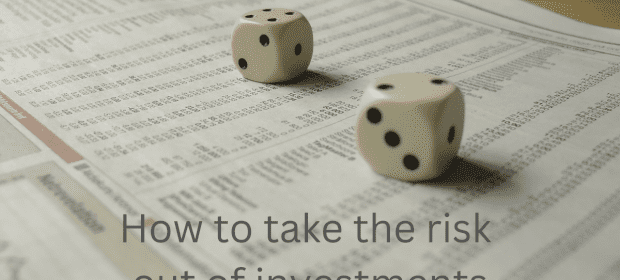
Each and every one of us has our own risk tolerance which should not be ignored when considering making any type of investment. Any good financial planner knows this and they should make the effort to help you determine what your risk tolerance is.
Then, based on this information, they should help you to build a portfolio that is aligned to your level of risk.
Determining one’s risk tolerance is based on several different criteria and there are different ways to look at how you should assess the risk you need to take. Firstly, you need to know how much money you have to invest, what your investment and financial goals are and what time horizon is involved. Then you need to consider the actual risk you are prepared to take.
Due to the emotional aspect of investing, there are various ways to look at it.
Let’s say you plan to retire in ten years and you’ve not saved a single penny/cent towards it. You could view this in two ways:
- You need a higher risk tolerance because you will need to do some aggressive investing in order to reach your financial goal.
- You may consider that as retirement is looming, you do not want to take unnecessary risks. If the markets were to crash it would affect your situation, therefore a more balanced portfolio (lower risk tolerance) would be better suited.
On the other side of the coin, if you are in your early twenties and want to start investing for your retirement now, you could share the same views.
- You should have a higher risk tolerance because you are young enough to ride out any market turmoil, maybe restructuring to a more cautious profile nearer the end goal.
- You should take a lower risk level and be happy with lower gains (potentially) but the end result will achieve what you require. You can afford to watch your money grow slowly over time.
There are more factors to consider in determining your tolerance.
For instance, if you invested in the stock market and you watched the movement of that stock daily and saw that it was dropping slightly, what would you do?
Would you sell out or would you let your money ride? If you have a low tolerance for risk, you would want to sell out… if you have a high tolerance, you would let your money ride and see what happens.
This is not based on what your financial goals are. This tolerance is based on how you feel about your money!
Again, a good Financial Planner should help you determine the level of risk that you are comfortable with and help you choose your investments accordingly.
Your risk tolerance should be based on what your financial goals are and how you feel about the possibility of losing your money. It’s all tied in together, it’s emotional.
Prior to working with any clients I insist on completing a detailed risk tolerance questionnaire. This will tell me exactly what your attitude to risk is and a suitable portfolio can be devised to suit you individually.
If you are interested in investing or saving for the future then get in touch to discuss the opportunities available and, just as importantly, the risks associated.
If you already have an investment portfolio and feel that it was never rated against your own risk tolerance then let me know. I am happy to discuss further and go through the questionnaire to ensure that what you have already done is suited to your circumstances.
This article is for information only and should not be considered as advice.
This article is written by Chris Webb The Spectrum IFA Group
More on risk and investing in different assets
Discussing investment risk
By Spectrum IFA
This article is published on: 11th July 2014

When talking to clients, Financial Advisers are required to consider investment risk. There are many risk profiling tools available for advisers to help understand a client’s attitude to risk but what happens next?
When I joined the industry, understanding risk was much easier than today.
Cash in the bank was considered low risk or even no risk at all. Government Bonds were considered slightly higher up the risk scale and Equities (shares) were higher risk again. Property was not considered risky and gave its name to an English expression, “Safe as Houses”.
In 2008 everything changed. Banks failed, Governments were under financial stress, Stock Markets fell. Do these events mean advisers should tell clients everything is high risk?
Banks are being recapitalised and in the European Union, Governments guarantee the first €100,000 of a bank deposit.
Two caveats to this, the type of account;
- not all accounts carry the guarantee and
- the guarantee is by banking group, not individual bank. If a depositor has money in 2 banks but they are part of the same group, then only €100,000 is protected.
We are all feeling better about the strength and security of banks so that is the good news. What about the deposit rates we are being paid? Is there an inflation risk we should be concerned with? If inflation is running at a rate greater than the deposit interest we are being paid, we are losing money in real terms aren’t we?
We have also seen Countries in financial difficulty and even being bailed out. Is it therefore always sensible to hold Government Bonds? What hap¬pens to bond values if interest rates rise? Is there a risk the value of Bonds would fall.
We have seen volatility in Equity markets with some large companies having financial difficulties. At the same time some companies are doing very well, are cash rich and are paying good dividends. Regulators tell advisers we need to understand our client’s attitude to risk and provide solutions to our clients that match those attitudes. The regulators do not yet tell us which asset class¬es represent high risks or low risks. Is it therefore good advice to tell a cautious investor to leave their money on de¬posit at a bank? Almost certainly not. How do we advise a client who wants no risk and a return in excess of inflation? It’s not an easy job.
Our feeling is that the only advice we can offer is to spread the risk, diversify in terms of asset classes, pay attention to liquidity and fully understand any product or portfolio. Now is certainly not the time to have all one’s eggs in one basket!
This article is for information only and should not be considered as advice.
This article appeared in Trusting #6 and was written by Michael Lohdi, Chairman of The Spectrum IFA Group