


In April 2026, I had the pleasure of addressing a select group of prospective buyers at an event hosted by a prestigious estate agency. The setting was a magnificent French château—the perfect backdrop to discuss the fiscal and legal complexities of acquiring such historic assets. While the focus was on the “Château lifestyle,” these insights are equally pertinent to any high-value property acquisition in France.
Tax considerations for Chateau owners in France
By Katriona Murray-Platon
This article is published on: 11th May 2026
The first question is whether to buy as a private individual or to set up a private property company called a Société Civile Immobilière (SCI). France has strict inheritance rules which dictate that the children inherit the majority of the estate leaving the surviving spouse with only the beneficial ownership (or ‘usufruit’) of the property. Whilst some Notaries advise inserting a clause in the deed of sale known as a “Tontine” clause to circumvent this, the inheritance aspects of this clause are often not fully explained. The effect of the Tontine is that the surviving spouse or partner is deemed to have owned the property solely from the outset. This can mean that the deceased spouses’ children are therefore disinherited.
An SCI is a legal entity through which several people, family members or investment partners, can own a property jointly. Shares can be gifted to children every 15 years utilising the €100,000 tax-free allowance per parent, per child. Non-residents can also, depending on their national law, leave their shares to their heirs thus avoiding French ‘forced heirship’ inheritance rules. The shareholders own the shares of the SCI company and the SCI owns the property. However if a shareholder wants to live in the property as their main residence in France, the SCI can lose some of its benefits. Also as a private company, the SCI needs to be created and maintained with albeit very basic (but necessary) book keeping, annual shareholders meetings and company registers.
The purpose of an SCI is to own property and receive the rental income, it cannot carry out any other business. So if the owner wants to carry out private events, chambre d’hote or sell produce, they need to set up a separate private limited company (S.A.R.L). For this they will need the advice of an accountant.
If the property is worth over €1.3million the owner(s) may be liable for Wealth Tax (‘IFI’). Non-residents only pay Wealth Tax on their French assets over this threshold. French tax residents, are liable for Wealth Tax on their worldwide properties after their 5th year of residence. The Wealth Tax declaration is done online with the income tax declaration. The tax is calculated on a sliding scale starting at 0.5% (for assets between €800,000 and €1.3 million) and rising to a maximum of 1.5% on assets over €10 million. Cash buyers may want to consider taking out a mortgage since it can reduce the net taxable value of the property. SCI shareholders are not necessarily liable for Wealth Tax even if the value of the asset is over €1.3 million since their loans to the SCI can be deducted. Additionally, primary residences benefit from a 30% valuation reduction, which may help keep the estate below the threshold.
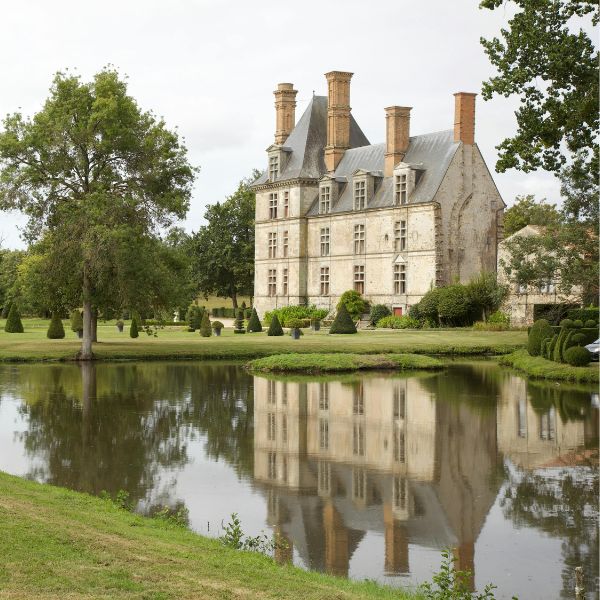
France rewards those who own their property for a long time through tapered relief on Capital Gains Tax (CGT). CGT does not apply to the main residence. On secondary residences, there is full exemption from income tax (19%) after 22 years and from social charges (17.2%) after 30 years. After just five years of ownership, the purchase price is increased by a set 15% for improvement works and 7.5% for costs, without the need to justify these costs. However, if the cost of improvement works has already been deducted from rental income, it cannot deducted again to reduce the capital capital gains. For more substantial renovations, common with older properties, it is important to keep the receipts and records of all costs.
Lots of property owners rent out all or part of their properties either all year or seasonally. There are two categories of rental income, furnished rental and unfurnished rental. All rental income is taxed in France. Furnished rentals are treated as business income. Obtaining the “meublé de tourisme” classification is recommended since this allows for an abatement of 50% on the gross income before it is subject to tax (compared with the standard 30% abatement). This classification also allows a business to earn up to €83,600 under the simpler Micro-entreprise or only €15,000 if unclassified. Over these thresholds the business would be under the “régime reel” and would need to the assistance of an accountant. An accountant would also be able to advise on the LMNP (‘Loueur en Meublé Non-Professionnel’) status, whereby the value of the property can be depreciated. It is a good idea to ask the current owners of the property how they have structured their rentals or business.
France remains one of the world’s most desirable locations for luxury real estate. Before committing to a purchase, consult with experts who understand the cross-border nuances of the French system. At The Spectrum IFA Group, we provide bespoke financial advice and coordinate with a trusted network of estate agents, notaries, and accountants to ensure your investments are both protected and optimised.Together we can make your French dream come true!