If you are buying a house in Italy and are intending on benefitting from the system of detractions and deductions for the costs of building and renovating your property, then here are 5 things which we learned in our home restoration.
Five lessons learned from the building bonus system in Italy
By Gareth Horsfall
This article is published on: 21st April 2026

- All payments must be made by traceable means i.e bonifico (bank transfer) or credit card payment. No trace, no bonus!
- If paying by bonifico (bank transfer) then you need to pay by using the ‘bonifico per agevolazione fiscale’ option with your bank and NOT the ‘bonifico ordinario’ option. It asks for more information, such as the partitia IVA of the company / person you have worked with and this is needed for the bonus.
- If you employ single workmen working alone then you don’t need an authorisation (SCIA or CIA) from the local authority but if they are a ‘dita edilizia’ (this can include even 2 people working together as a construction company) then you may need to have a ‘piano di sicurezza’ from an architect who will need to draw that up and provide you with the necessary numbers/reference codes. No ‘piano di sicurezza’ no bonus! (Our’s cost around €1000!)
- Your workmen can apply for 10% IVA (VAT) on purchased items, but this is not necessarily a given. Our commercialista recommended that we signed a document ‘richiesta di applicazione dell’IVA ad aliquota ridotta’ for each workman / company so they would be authorised to apply for it as the materials would fall under the approved renovation works. Obviously, the Agenzia delle Entrate have the right to investigate these events in the future and so we did the maximum possible to avoid future problems. Documents should be kept for 10 years.
- Try and employ local workmen or businesses which operate in the area, because if you have problems in the future you want to be able to get hold of them quickly and easily.
Communication is the key
By Jeremy Ferguson
This article is published on: 21st April 2026

It has certainly been an eventful start to the year from a financial perspective – it’s never dull for long, that’s for sure, in economics and in financial planning. It’s impossible to ignore what’s been going on in the world, more so when it starts impacting our day-to-day lives, such as with rising oil prices when we fill up our vehicles.
Since I last wrote an article, the world is in a very different place due to the situation in Iran. As I have always said when people ask me about what I think will happen to their investments in the days, weeks or months ahead, my answer is always I simply don’t know, as what is going to happen next on the global stage is not anything that can be predicted.
The one thing I do know however, is that rather than trying to predict, it is best to simply be prepared and fully understand what you are invested in and why. Anyone with a well-structured portfolio should be aware of the risks involved, which is an important part of what I do. In simple terms, I like to use the eggs in a basket analogy, as when things like the Iran situation pop up, there tend to be winners and losers. The price of oil and gas may have risen, creating issues with prices in the stock market, but if you hold shares in oil and gas companies, these may well have increased.
Conversely there is now upward pressure on inflation, which may well mean interest rates no longer continue to fall, with the possibility of rises again in the future. This is good news though if you have money on deposit, as your savings interest is less likely to decrease, and will possibly increase. If you are invested in many different types of assets, as in the above two simple examples, when one loses, quite often another will win (so to speak).

All of this reminded me of the importance of regularly communicating with clients, particularly when ‘worry’ is prevalent in the press and news due to significant events such as those we are witnessing at the moment. It is also a reminder of how important it is for clients to fully understand what they are invested in.
Almost no clients have contacted me worried about their investment values recently, which led me to reflect on the reasons why.
Importantly they understand markets go up and down periodically but in the long term their portfolios should increase in value. When we started working together, we undertook a thorough due diligence process to understand the investment journey they wished to go on and set up the strategy accordingly.
I provide clients with knowledge and understanding of what we are doing, what can happen, and what is most likely to happen. Essentially, a lot of time is taken at outset to inform and educate them in the solution being proposed, warts and all.
Many of my clients have been working with me for a long time, as a result of which we have been through many of these ‘ups and downs’ before, as well as other life events. They trust my process and advice.
All of this means people don’t tend to worry about their portfolios because they know they are in safe hands. With all the other stresses in life, this is something you cannot put a price on, particularly in retirement.
If you are at all worried about your financial arrangements, please feel free to get in touch for an impartial review.
Spain’s Non-Lucrative Visa for Americans
By Matthew Green
This article is published on: 17th April 2026

For many Americans, moving to Spain is about more than a change of scenery – it’s about improving quality of life, reducing living costs, and enjoying a better pace of living. The Non-Lucrative Visa (NLV) offers a clear pathway to residency, but in our experience, the financial planning behind the move is where the real challenges, and opportunities lie.
What Is the Non-Lucrative Visa?
The NLV allows non-EU citizens to live in Spain without working locally (including remote work), provided they can demonstrate sufficient financial means to support themselves.
2026 Financial Requirements
To qualify, you’ll need to show:
– Main applicant: ~€28,800 per year
– Each dependent: ~€7,200 per year
– Evidence: bank statements, investment accounts, pensions, or passive income (income is generally viewed more favorably than savings alone)
What Qualifies as Income?
Most commonly accepted sources include pensions, Social Security, investment income, and rental income
Beyond the Visa: The Real Financial Challenge
While many focus on meeting the visa requirements, fewer consider what happens next. Once you become a Spanish tax resident, your worldwide income may be taxable in Spain—while you also remain subject to US taxation. Without proper planning, this can lead to unnecessary tax exposure and complexity.
Common Mistakes We See
– Relying solely on US-based advice
– Holding non-compliant investments (such as PFICs)
– Overlooking Spanish wealth tax
– Structuring income inefficiently
– Ignoring currency considerations
How to Prepare
The most effective strategies we see clients implement before moving include:
– Restructuring investment portfolios
– Planning the timing of income and withdrawals
– Reviewing exposure to Spanish taxation
Ideally, this planning should begin 6–12 months before your move.

The Importance of Regulated Advice
There has been a noticeable shift toward individuals relying on online sources and AI-generated guidance for financial decisions. While accessible, this information is often generic and not tailored to individual circumstances—particularly when dealing with complex cross-border tax rules between the US and Spain.
We have seen cases where individuals, acting on incomplete or misinterpreted information, faced unexpected tax liabilities or held unsuitable investment structures. Regulated financial advice is different. It is personalized (with a “z”) to your specific situation, compliant with regulatory standards, and comes with accountability—ensuring recommendations are suitable and aligned with your long-term objectives.
If you are considering a move to Spain, the earlier you plan, the better your financial outcome is likely to be.
We work with US clients relocating to Spain to help structure their wealth efficiently, avoid common pitfalls, and navigate both US and Spanish tax systems with confidence.
If you would like a personalized review of your situation or to discuss your plans in more detail, feel free to get in touch for an initial consultation.
Final Thought
Meeting the visa requirements is straightforward—but getting your financial planning right is what ultimately protects and enhances your wealth over the long term.
Nations Cup at Royal Malta Golf Club – Round Three
By Craig Welsh
This article is published on: 16th April 2026

Scandinavia & Nordics Deliver Again!
The final round of the Spectrum Nations Cup brought the competition to a thrilling conclusion, with momentum swings and decisive performances shaping another dramatic finish.
Entering Sunday with a 1.5-point lead, the Rest of the World team looked well placed to secure the title. However, Great Britain & Ireland refused to play a supporting role. Producing their strongest performance of the tournament, GB & I stormed to an emphatic 5–1 victory, dismantling RoW’s advantage and reopening the race at the top.
While GB & I disrupted the standings, Scandinavia & Nordics showed the composure expected of defending champions. Facing a determined Malta side, they secured the result they needed, drawing 3-3. It proved decisive. In a competition defined by fine margins, a half-point made all the difference.
Finishing just half a point clear at the top of the standings, Scandinavia & Nordics retained the Nations Cup title, underlining their resilience and ability to deliver under pressure.
The Spectrum IFA Group once again proudly supported the tournament, with Craig Welsh & Jozef Spiteri present throughout the event. Their continued backing helps sustain a competition built on quality, sportsmanship, and drama.
The trophy remains with Scandinavia & Nordics — see you next year for more drama!
The Nations Cup is organised by the Royal Malta Golf Club
How to halve your taxes when investing in Spain
By Chris Burke
This article is published on: 15th April 2026

If you’re investing in Spain, how your withdrawals are taxed can make a huge difference to how much you actually keep. Even when everything else stays the same – the investment, the growth, and the withdrawals – the final outcome after tax can vary significantly.
To understand how this works, let’s look at a simple example:
- Initial Investment: €200,000
- Growth: 5% annually for 15 years
- End Value: €415,786
- Withdrawal: €20,000 per year
This sets the foundation for comparing how different tax treatments affect your income.
There are TWO main ways your investment could be taxed in Spain:
Regular Investment (Standard Tax)
- Taxed on the full €20,000
- Spanish tax bands apply (19%–21%)
Tax: €4,080
Net income: €15,920
Alternatively, consider a different structure:
Spanish-Compliant Investment (Capital-Based)
Each withdrawal is proportionally split between:
• Return of capital (tax-free)
• Gain (taxed only on the profit proportionally against the original capital invested)
Example (Year 1):
• €200,000 ÷ €415,786 × €20,000
• €9,620 tax-free
• €10,380 taxed
Tax to pay:
• €6,000 @ 19%
• €4,380 @ 21%
Total tax €2,060
Net income: €17,940 per year

15-Year Results
Over time, these differences compound – lets look at how the two approaches compare over 15 years:
| Regular Investment | Spanish-Compliant | |
| Net per year | €15,920 | €17,940 |
| Total received | €238,800 | €269,100 |
| Total tax paid | €61,200 | €30,900 |
The Difference
As you can see, the impact is substantial. The structure alone can lead to around €32,000 in tax savings and more than €2,000 extra income per year.
Why This Works
This outcome is not due to higher returns, but rather a more efficient tax structure. The key principles are:
- You withdraw your own capital first
- Only the gain is taxed ‘proportionally’ against the original amount invested
- Over time:
-The taxable portion decreases
-The tax paid decreases
-Your net income increases
Bigger Investment = Bigger Savings
Naturally, the larger the investment, the greater the potential benefit. For example, with a €400,000 investment using the same parameters of a 5% return per year:
After 15 years, withdrawing €30,000 per year:
| Regular Investment | Spanish-Compliant | |
| Net per year | €23,820 | €26,851 |
| Total received | €357,300 | €402,765 |
| Total tax paid | €92,700 | €47,235 |
Bigger Difference
With a larger portfolio, the savings become even more pronounced – around €45,465 in tax saved and over €3,000 additional income per year.

Key Insight
At this point, an important takeaway becomes clear. Most investors focus on returns, but in Spain, the tax structure can be just as important in determining your final outcome.
Conclusion
In summary, by using a Spanish-compliant structure, you can significantly improve your financial results. This approach allows you to:
- Save tens of thousands in tax
- Increase your annual income
- Improve long-term outcomes
There are also other potential benefits such as mitigating tax for inheritance planning and passing on gains/wealth to children.
I’m here to help you get organised and take those financial worries away.
If you’d like to discuss any of these topics in more detail or arrange an initial consultation to explore your situation, you can do so [here].
You can also [read independent reviews of my advice and service here].
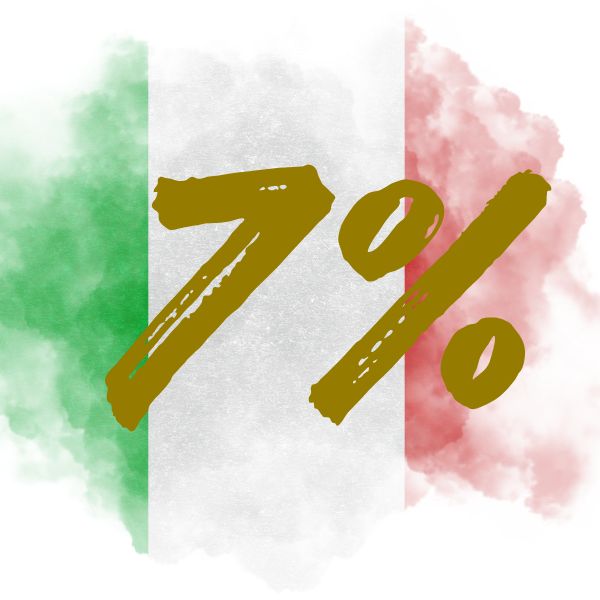
Expansion of Italy’s 7% Pensioners’ Tax Regime
By Andrew Lawford
This article is published on: 14th April 2026

Many of you will recall that in 2019 Italy introduced a preferential tax regime for pensioners taking up residency in certain areas of Southern Italy.
Over the years there have been a few tweaks made to the rules, but these have generally had the effect of making it more accessible (unlike what has happened to some other tax regimes available for new residents).
Recently, a further change has been made to the regime by raising the population ceiling for eligible municipalities from 20,000 to 30,000 inhabitants, thereby opening up a broader range of towns across the eligible regions of Southern Italy.
What the regime offers
Qualifying individuals pay a flat 7% substitute tax on all foreign-source income, in place of ordinary progressive IRPEF rates. They are also exempt from the IVIE and IVAFE wealth taxes on foreign assets and are relieved of the foreign asset monitoring obligations that would otherwise apply in the RW schedule of their Italian tax return.

Who can qualify
The core requirements remain unchanged. The applicant must hold a pension paid by a foreign entity, must have been tax resident outside Italy for at least five consecutive tax years prior to the year in which the option takes effect, and must be moving from a country with which Italy has an administrative cooperation agreement in place. The regime covers only income considered to be produced abroad.
Geographically, the transfer must be to a municipality in Sicily, Calabria, Sardinia, Campania, Basilicata, Abruzzo, Molise or Puglia, or to certain municipalities affected by the 2009 or 2016 earthquakes. The population of the chosen municipality — assessed using ISTAT figures as at 1 January of the year before the option first applies — must not exceed the new 30,000 threshold.
Sound like it might be of interest to you? Feel free to get in touch for an initial consultation.
THE folder – are you prepared?
By Gareth Horsfall
This article is published on: 8th April 2026

Living in a foreign country is never easy, but have you thought how complicated it would be for your family if you die suddenly?
(Apologies for the subject matter around Easter, but if you are anything like me, I like to try and organise my annual tax paperwork for the commercialista around this time and so it is also a good moment to think about putting parts of your financial paperwork in order)
This article is one which I prepared years ago and have been sending out infrequently because on my travels and in the conversations I have, it is ever apparent that most people do not have all their financial paperwork in order in case anything happens to them.
Ensuring that your papers are in order in the event of your sudden death is incredibly important when living in another country. It will provide you with peace of mind that your loved ones will not have too much difficulty in administering your estate, and your family will be thankful that you did it for them.
The big problem is that we often have documents spread across multiple locations: the office, a house in another country, with family members and in that old box that no-one dares look in.
The purpose of this article is to outline a proven way of organizing your affairs to reduce stress on the family in the event of your death.

So what is ‘THE’ folder?
It is a single file (digital or physical) where you keep all of your important personal and financial information together. It allows easy access to these documents in the event that you are no longer around to deal with these things. It is really important to have it in place where one family member takes the lead on the family finances (as I do in our household). That includes paying bills, managing accounts and storing documents.
Is it worth the effort?
Well, I think it is worth the effort. I did mine a while ago and it gives me peace of mind more than anything else. I also told a few people about its location and left a note of who my wife should contact in the event of my death.. A time of loss can be stressful enough without having to try and piece the financial affairs together.
Preparing ‘THE’ folder is much more than avoiding stress as well. If you leave behind an administrative nightmare you could also delay access to the inheritors’ funds and potentially cost a small fortune in legal fees.

To give you an example of this, the UK Department of Work and Pensions estimate that there is currently more than £400 million sitting in unclaimed pension pots in the UK.
Approximately 1 in 7 Americans are estimated to have unclaimed property, such as forgotten bank accounts, insurance proceeds, or unclaimed inheritances
Which is best…..physical or digital?
This comes down to personal preference. It can be done by either creating an electronic file that survivors can access in the event of death. This file can then be stored on your main computer, in the cloud or on an external hard drive. Alternatively you can use a physical folder to keep all of the important information together.
For what it’s worth, I decided to do both when building mine because my wife prefers paper and so is happier with hard copies of everything. I prefer digital. I have also shared the digital folder with some trusted family members.
So what should go in ‘THE’ folder?
Birth, marriage and divorce
- Personal birth certificate
- Marriage licence
- Divorce papers
- Birth certificate/adoption papers for minor children
- Certificato di residenza (although it only has a 6 month validity, it might be worth while keeping a copy in there, where you are listed as being at your current address)
- Stato di Famiglia document
You can download free copies of your Italian documents, and copies with the ‘bollo’ (for €16) from the Italian national register website, here: https://www.anagrafenazionale.interno.it/ You will need to access it with your SPID or CIE.
Life insurance and retirement
- Life insurance policy documents (including beneficiary nomination forms)
- Details of any employer death in service benefits
- Personal pension documents
- Employer pension details
- Annuity documents
- Details of any entitlement to state pensions and in which country they derive.
Bank accounts
- List of bank accounts with account numbers, login details, passwords etc
- Details of any credit cards
- Details of safety deposit boxes
Assets
- Property, land and cemetery deeds
- Timeshare ownership
- Proof of loans made
- Vehicle ownership documents or rental agreements.
- Stock certificates, brokerage accounts, investment platform details, online investment account details
- Details of holdings of premium bonds, government bonds, investment bonds
- Partnership and corporate operating/ownership agreements (including offshore companies)
Liabilities
- Mortgage details
- Proof of debts owed
Details of gifts
- Dates and amounts/values (potentially helpful when calculating any inheritance tax liability)
Gifts which have been made many years ago can be hard to track down and so it’s important that when you make a gift to a family member or anyone else, that you keep a copy of the bank statement showing the amount paid, on what date and to whom.
If you made a larger gift, in Italy, then it will likely have been made through a notaio and so paperwork should be available. Keep these documents safe.
Income sources
- Make a listing of all your sources of income, especially ones that your family might not know too much about
- Employer details
- A copy of your most recent tax return or accounts.
Monthly expenses
(so they can be maintained if necessary or cancelled if not. Essentially list the fixed costs which would need to continue after death)
- Utilities
- Insurance
- Rent/mortgage
- Loans
- Subscriptions/memberships
Email and social media account details
Essentials
- Will / testament + details of the legal firm that helped create it
- Living will details.
- Instruction letter/s
- Trust documents
- Burial/cremation wishes
Contact details
- List of names and contact numbers for: Financial adviser, doctor, lawyer/solicitor, accountant, insurance broker,
How often should ‘THE’ folder be reviewed?
Firstly, it is sensible to note the date that it was last reviewed so that anyone using it has an idea of how up-to-date the details are.
Going forward, reviewing the file on an annual basis should be sufficient.

Online passwords
I think it’s safe to say that this is the most problematic part of the whole process because we have so many passwords nowadays and need to change them all the time.
f you are not comfortable keeping these in your hard copy folder, consider using a password management program. A password manager allows you to save all account usernames and passwords in one place. They are then protected using one master key. There are a number of them available. Don’t forget to leave note of how to access the password manager though!
This may, however, be a step too far for you given the data breaches that seem to happen often and I appreciate that and if you are not comfortable in using such an app then its important to have a physical record some where that can be accessed in the event of your death.
PHONE PASSWORDS
This may seem like common sense but our lives now revolve around our phones and so ensuring that you leave details of not just your password to access the phone / PIN or line drawing shape, but also the PIN or access codes when the phone has been switched off AND your PUK code in the event that they get blocked out. If you use fingerprint authentication then you may also want to ensure that you leave open another access possibility, such as the PIN so that the phone can be opened without the need for your fingerprint, when that is no longer possible.
COMPUTER PASSWORDS
As per the above, do the same for your computer.
SPID and CIE
It’s probably worth a note about your SPID (Sistema Pubblico di identità digitale) and / or your CIE ( carta d’identità abilitata). These are digital identities accessed via apps and are now arguably some of the most important phone apps to access important financial and legal information held by the Italian state and therefore ensuring that you leave details of your passwords to access the apps could help your beneficiaries resolve estate issues without needing to engage or financial professionals to communicate with the various agencies on your behalf and at great cost.
And finally…
Lastly, be sure to tell someone about it. There is little point going to the effort of creating such a folder if no one knows of its existence / where to find it.
Financial update France April 2026
By Katriona Murray-Platon
This article is published on: 4th April 2026

March has been a rather long and hectic month not just in terms of workload but also due to the ongoing geo-political situation. Since the joint US and Israeli strikes on Iran on 28th February, we have faced soaring oil prices and persistent market volatility. With no clear exit strategy, investors remain nervous.

The investment landscape has changed significantly. One fund manager recently shared that while his career began with decisions based on technical data and analysis, he now finds himself monitoring Truth Social for indications of policy direction. The traditional “quiet weekend” has been replaced by the risk of late-night social media updates from the US President that can pivot global markets come Monday morning.
Despite a consensus that Iran needs to de-escalate to alleviate the economic pain felt by its regime and populace, and that US troops on the ground would be highly risky with no guarantee of success, both sides continue to match each other’s threats. Just last night President Trump seemed to suggest that the war would continue for another couple of weeks.
Oil and gas price rises have continued to rise over the past few weeks. Brent crude oil was 63.3% higher for the month, the largest monthly percentage rise on record over recent decades.
The markets remain understandably pre-occupied by the Middle Eastern conflict, and specifically the impact on energy prices. This could also affect inflation expectations leading to central banks possibly raising interest rates.

Turning to France, tax season will soon begin as the online tax declarations will commence from 9th April. If you want to make a start on your tax return, now is the time to ensure that all the papers and information are ready to be entered into the declaration.
The MaPrimeRenov website is now back up and running (since 23rd February). Lower income households can obtain financial help for just one type of improvement, but other households will have to plan to do several renovations. A back log has built up due to the site closure, so expect delays. There is also a new requirement that you must speak to a MaPrimeRenov adviser before the work begins.
You can now choose whether you would prefer that your investment income be taxed at the flat tax rate or at your marginal rate. Previously by ticking the box 2OP on the tax declaration, your interest, dividends and capital gains would be subject to your marginal rate and not the flat tax of 31.4%. This choice was irreversible even if the taxpayer later realised that it was not beneficial. As from next year, taxpayers will be able to change this option. However, for income received in 2025 and declared in 2026 this does not apply.
The thresholds for micro-entreprises will increase for income earned in 2026, 2027 and 2028 to €203,100 for Micro-BICS for sales of goods and holiday rentals and to €83,600 for other micro-BICs (furnished rentals, services and arts) and for micro-BNC businesses. However, the threshold remains at €15,000 for “meublé de tourisme non classé”.
After a strong start to 2026, gold’s “safe haven” status is being called into question. Traditionally seen as a less volatile asset class that can hold its value in times of crisis, hedging against equity market falls, since the conflict escalated in March, gold prices have fallen steadily. In France, there are two types of tax on gold, either a 11.5% on the sale price or at 36.2% on the gain with tapered relief based on the duration of ownership and full exemption after 22 years.
After the Easter weekend I will be back at work but then will take the second week of the school holidays to spend time with family. If you have any questions about your finances or taxes in France, please do get in touch to arrange a free, no obligation, phone call or meeting.
Are Americans moving to Spain?
By Matthew Green
This article is published on: 2nd April 2026

And What It Means for Their Finances
In recent years, Spain has become one of the most attractive destinations for Americans looking to relocate abroad. From the Mediterranean lifestyle to a lower cost of living and high-quality healthcare, Spain offers a compelling alternative to life in the United States. However, while the lifestyle benefits are clear, the financial implications are often less understood.
The Numbers Behind the Trend
The number of Americans living in Spain has steadily increased, driven by a desire for better work-life balance, more affordable living, and the rise of remote working opportunities. Many are choosing locations such as Valencia, Alicante, and Barcelona for their combination of lifestyle and accessibility.
Key reasons for the move include:
- Improved quality of life
- Lower living costs compared to major US cities
- Access to affordable healthcare
- Flexible working and digital nomad opportunities
The Financial Reality: You Don’t Leave the IRS Behind
One of the biggest surprises for American expats is that US tax obligations continue regardless of where they live. The United States taxes based on citizenship, meaning Americans must still file annual tax returns and report worldwide income.
In addition to US requirements, living in Spain may also mean exposure to Spanish income tax, wealth tax, and reporting obligations on overseas assets.
Why Cross-Border Financial Planning Matters
Financial planning becomes more complex when two tax systems are involved. Many US-based investments can be inefficient or problematic when held while living in Spain, potentially leading to higher tax bills or administrative challenges.
With the right planning, it is possible to:
- Structure investments efficiently across jurisdictions
- Reduce unnecessary tax exposure
- Simplify financial reporting
- Align financial plans with a new lifestyle in Spain
Turning a Lifestyle Move Into a Financial Advantage
Relocating to Spain is not just a lifestyle decision—it can also be an opportunity to improve financial efficiency. With careful planning, many expats can create more predictable income, improve tax outcomes, and protect their long-term wealth.

How We Help
We work with expats to help them understand both US and Spanish financial obligations, review existing investments, and build strategies that support their new life in Spain.
If you are an American living in Spain or considering the move, now is the time to ensure your finances are structured correctly. A simple review could help reduce tax, simplify your finances, and protect your long-term wealth.
Get in touch to arrange a no-obligation discussion.
UK and Spanish Inheritance Tax
By Barry Davys
This article is published on: 1st April 2026

A simple guide to key terms used in cross-border estate planning
Understanding inheritance terminology can be challenging, particularly when dealing with assets in both the UK and Spain.
Differences in legal systems, tax rules, and administrative processes can cause confusion for individuals and families managing cross-border estates. This guide is designed for UK nationals living in Spain, Spanish residents with UK assets, and anyone involved in administering an estate that falls under both jurisdictions. It explains commonly used inheritance and probate terms in clear language to help you better understand the process and make informed decisions.
Will
A written document prepared before a person’s death that sets out their instructions regarding who should manage the administrative aspects of their estate, who will be responsible for looking after their money and possessions while the process is being completed, and who they wish their assets to be distributed to.
Estate
The “estate” is the collective term for all financial interests of the deceased. This includes bank accounts, insurance policies, pensions, property, shares (including private and family-owned company shares), bonds, loans made to third parties that now need to be repaid, and other assets.
Forced Heirship (Spain)
In Spain, rules apply regarding how two thirds of an estate must be distributed. Children take priority over spouses, and only one third of the estate can be freely distributed.
However, for expatriates living in Spain, EU Regulation 650/2012 (“Brussels IV”) allows them to elect for the inheritance laws of their nationality to apply to their Will. For a UK national, for example, this makes it possible to distribute the entire estate in accordance with their wishes.
Please note that this EU regulation only applies if the instruction is expressly included in the Will.
Probate
Probate is the term used to describe the legal process of administering and distributing an estate.
In Spain, the document confirming distribution in accordance with the law and the Will is called the Escritura de Aceptación y Adjudicación de Herencia (Deed of Acceptance and Adjudication of Inheritance), which must be signed before a Spanish notary.
In the UK, the equivalent document is known as the Grant of Probate, which is issued by the Probate Office.
Trustee and/or Executor
A trustee and executor can be the same person, although it is often more than one individual in order to share the administrative responsibility.
The trustee is responsible for safeguarding the assets of the estate until they are formally transferred to the beneficiary. The executor is responsible for ensuring the legal formalities are completed so that the transfer of assets to the beneficiary is valid.
Beneficiary
A beneficiary is a person named in the Will who will receive all or part of the estate.
Bequest
A bequest is the term used to describe what is transferred to a beneficiary. This may consist of a single asset, such as a property, or multiple assets, such as property, bank account balances, and shares. A group of assets transferred together may also be referred to as a bequest.
Modelo 650
Modelo 650 is the Spanish tax form used to declare and pay inheritance tax and to support the preparation of the Escritura de Aceptación y Adjudicación de Herencia.
PA1P and IHT400
The UK form used to apply for a Grant of Probate is Form PA1P (if there is a Will) or PA1A (if there is no Will).
If inheritance tax is due, the executor must first complete Form IHT400.
Who Pays Inheritance Tax in the UK?
In the UK, the estate of the deceased is assessed for inheritance tax. The assessment is based on the total value of the estate.
Who Pays Inheritance Tax in Spain?
In Spain, each beneficiary who is a Spanish tax resident is assessed individually for inheritance tax based on the value of the assets they receive.
Double Taxation on Inheritances
As the UK and Spain tax different entities (the estate in the UK and the beneficiary in Spain), the same entity is not taxed twice. As a result, inheritance tax is generally outside the scope of the Double Taxation Agreement.
However, practical solutions may be available depending on individual circumstances, and appropriate professional advice should be obtained.
When Must Inheritance Tax Be Paid in Spain and the UK?
Inheritance tax is generally due within six months of the date of death. It is important to note that tax is not due from the date the beneficiary physically receives their bequest, which is a common misconception.
This six-month rule applies in both Spain and the UK:
- In Spain, payment must be made within six months of the date of death.
- In the UK, tax must be paid by the end of the sixth month following the death.
Case Study: Protecting Life Insurance from Inheritance Tax
At the start of every client relationship, we carry out a detailed discovery process to fully understand your personal and financial circumstances.
In this case, a married couple, both UK nationals living in Spain, held life insurance policies valued at £1,000,000 each. During our review, we identified that the appropriate Inheritance Tax mitigation documentation had not been put in place. Without this structure, the value of the life insurance policies would form part of their estate and could be subject to UK Inheritance Tax for their UK tax-resident beneficiaries.
Given that their estate exceeded the available allowances, this created a potential Inheritance Tax liability on the life assurance proceeds.
We implemented the appropriate documentation to ensure the policies were structured correctly. As a result, up to £400,000 per policy (£1,000,000 × 40%) in potential Inheritance Tax is avoided for their beneficiaries.
Important Notice
This article is provided for information purposes only and does not constitute legal advice. We recommend seeking professional legal advice to assist with the probate and distribution processes of an estate.
A specialist Inheritance Tax and Wills lawyer works with us to provide this service.
For an introduction to the lawyer, please email:barry.davys@spectrum-ifa.com