
Tel: +34 93 665 8596 | info@spectrum-ifa.com | LinkedIn Facebook

Viewing posts categorised under: Investments

Investment bonds in Italy

By The Spectrum IFA Group Italy
This article is published on: 22nd October 2021

22.10.21

If you are resident in Italy, or planning to move here, it is important to complete a review of your investments to avoid unnecessary and expensive tax liabilities locally. It is well known that how to handle your finances is one of the major challenges of moving to a new country – the tax and legal systems are different, and on top of this, everything is in a language you might not fully understand. An experienced adviser based in Italy will help to ensure your finances are arranged both tax-efficiently and appropriately for your individual circumstances.

The best time to carry out a review of your investments and to develop a long-term financial plan is before you make the move. This is something many people don’t consider, but acting early allows you to make the most of valuable planning opportunities and to avoid costly mistakes, for example with the timing of a property sale or taking a pension lump sum. But even if you are already here, it is never too late to make sure you are making the most of your money.

There are many ways of saving and investing as an Italian tax resident, including with banks, in directly held portfolios, in collective investments, and in trust and pension structures. Taxation in Italy is complex, and you will need an accountant to help you with tax returns. One structure that is highly tax efficient, which simplifies annual tax declarations and is also widely used across Europe, is the investment bond.

The 10 benefits of investment bonds in Italy

There are several advantages to using life insurance investment bonds for Italian residents:

  1. Tax deferral during the accumulation phase – unlike a directly held portfolio which attracts ongoing capital gains tax and income tax, investment growth within a bond is not taxable (income and gains are able to accumulate on a ‘gross roll up’ basis)
  2. Low effective tax rates when withdrawing funds from the policy – when withdrawing funds from an investment bond, the withdrawal is split into two components: the initial capital, and the growth element. Tax of 26% is due only on the growth element of the withdrawal, so effective tax rates are low.
  3. Gains are calculated net of all costs – directly held investments in Italy are always less efficient than a life insurance bond.
  4. Availability of asset management services otherwise inaccessible to Italian residents – there is a wide range of investment options, including EU authorised funds, discretionary portfolios and index trackers, all available in the currency of your choice.
  5. Your money is outside the Italian financial system – investments are held securely in Ireland or Luxembourg.
  6. Simplification of reporting and ongoing tax administration – there is only a single asset to declare in your tax return whatever the number of investments within the bond, as opposed to the complicated declarations necessary for directly-held foreign assets.
  7. Reduction in VAT – asset management services in Italy generally attract VAT at 22%, but using a life insurance bond results either in a substantial reduction to, or an exemption from, VAT.
  8. Inheritance tax savings – beneficiaries named in a life insurance bond receive the proceeds free from Italian inheritance tax.
  9. Portability – the investment bond structure is widely recognised in other jurisdictions, so you do not necessarily have to encash your investment if you relocate. However, care is necessary to take into account the differences between tax laws, so take advice prior to moving jurisdictions.
  10. Time apportionment relief on return to the UK – if you decide to return to the UK, investment bonds are particularly attractive as time apportionment relief under UK tax rules state that only investment growth generated whilst resident in the UK is taxable.

Whilst the ideal time to review your finances is before you move, we can also help if you are already resident in Italy. Contact one of our advisers (free of charge and without obligation) for an introductory discussion and an outline of how we can help.

Investing in China

By Gareth Horsfall
This article is published on: 16th August 2021

16.08.21

Is communism the way forward?

Whilst on holiday, peering out over turquoise bays, ones mind starts to wander and what better route to take than pondering whether communism really has some postive aspects which we, in the capitalist world, would do very well to replicate.

I think my mind has had the space to wander into this rather philosophical space because there has been little to discuss on the Italian tax front (one of my favourite topics). We are waiting for the big announcement on exactly how Mario Draghi intends to overhaul the tax system in Italy and that decision is ‘supposedly’ being announced shortly (but will likely take longer than expected, as is always the case in Italy!). As soon as I know anything I will let you know.

So to continue my thought wanderings I thought we should talk about China.

But before I get into the detail, I want to write about a conversation I had with some clients (who shall remain nameless), who took a long trip along the old Silk Road some years ago. They had been amazed at the development they had seen along the old route, and that it had mainly been funded by China. They also travelled in China itself and commented on the magnificence of its technological and infrastructure progress. These clients, who I would say could easily be classified as socialists and defenders of free speech, said that given what they had seen and the speed at which China can just ‘get on and do things without arguing about it’ does make you wonder ‘if there is some merit to their form of communism’.

And with that thought in mind, this E-zine will explore some of those aspects of Chinese governance. This E-zine was inspired by a blog post I recently read from an asset manager called David Coombes at Rathbones Asset Management (a collaborative partner to The Spectrum IFA Group). His blog puts some recent issues surrounding China’s political decisions in a new and interesting light.

investment risk

So what is happening in China?
Late 2020, Chinese regulators stepped in and forced Ant Group, a digital payments spin-off from ecommerce giant Alibaba, to abandon its stock market listing on the Shanghai exchange. More recently ride-sharing app Didi Chuxing was pulled from Chinese app stores days after it brushed aside regulatory concerns about data security to list on the stockmarket in New York. In addition, the Chinese authorities have levied a record $2.8 billion fine on Alibaba for anti-trust violations, and regulators are investigating food delivery app Meituan and internet and gaming conglomerate Tencent for the same issues.

Not only are they attacking the tech industry but the government, in an overnight decision, seemingly abolished ‘for-profit’ education in core subjects for kids up to 15 years old, sending an entire private education industry into complete chaos.

Many investors are concerned about a wider crackdown across multiple industries.

The way of the Dragon

The way of the Dragon!
Before we become too shocked by how the Western media portray decisions by the Chinese government, it is a good idea to look at the problems from a Chinese perspective rather than only through our Western lens. China, in much the same way as the West, is struggling with the tremendous power that Chinese online giants now wield over various sections of society. They have created a kind of ‘winner-takes-all’ online marketplace in technology and data. Equally Chinese families are now have to pay increasingly large fees to send their children to school to get even a half decent education.

Does all this sound too familiar?

If so, let me ask you a few questions:

* Do you think that big tech firms( Amazon, Google, Facebook, Apple etc) play a much too important role in our lives and do you think they should be more heavily regulated in the way they keep and use our data?
* Do you think that big tech firms should pay more tax?
* Do you know anyone with kids who is paying a fortune for private education? From supplementary English, sports or music lessons and /or having to pay a small fortune in nursery costs to secure a place in a good nursery school for their kids?

Technology
I don’t know many people these days who can easily defend the growing, and rather worrying power of the tech companies in and on our societies. I, personally, am concerned about the use of data, the power of their lobbying and their continued ‘legal’ tax avoidance (Amazon paid an effective tax rate of 1.2% in 2020 when their marketplace exploded with Covid stay at home policies, which drove even more people to online shopping!). Yet, in many ways we are slave to these beasts. I couldn’t run a business without them, and they do make life much easier.

Education
The Chinese authorities felt that competition in education was putting too much pressure on children and creating a financial drain on parents that is possibly slowing the birth rate and affecting property prices. This was putting children of less wealthy parents at a huge disadvantage. Sounds oh so familiar! Some ‘3 year old’ Chinese children were receiving extra tuition to prep for entry exams to get a place in kindergarten. The Chinese government says this was having a negative impact on the social cohesion of the country. As a father, I think I have to agree!

China does what the West keeps talking about
Could it be that China have looked at the Western model and decided it would like to introduce more regulation to benefit families and the populous, instead of corporations? Given they are named the ‘Central People’s Government’ one might be forgiven for thinking that they are looking at putting people first and corporate expansion second. Wouldn’t it be nice if our own governments could do the same?

Do you prefer democracy or dictatorship?
The truth of the matter is that Chinese leaders don’t pull any punches when they want to implement new policy. They don’t need to put it to a public vote; they can do it overnight. This means that businesses, small and large, suffer hugely as a result. I would be very worried as a father, contributor to the family purse and businessman if the Italian government had the power to introduce legislation which effectively put me out of business overnight.

So, what do I prefer: democracy or dictatorship? In all honesty, I think I am a middle-ground man. I don’t think either work well. I think I would probably choose to compare socialism versus capitalism as economic models and once again, I don’t think either work well in the extreme. I think that we live in an advanced capitalist society in the West which should be reigned in through more regulation in these new and influential sectors. What is perpetually annoying is that I work in financial services which is one of the most heavily regulated businesses and yet we have the big tech firms, the new world of ‘influencers’ and the online world which is largely unregulated and can operate in whichever way it pleases. Maybe China has got it right and they are trying to create a more socially cohesive society.

So should you still invest in China?
You could actually think of the Chinese Government intervention as ethically responsible politics. It is focussing on inequality and trying to improve society as a whole. If you look at it through that lens, then Chinese investment starts to look quite appealing.

That being said, it would be foolish to say that this doesn’t come with some inherent underlying risks. Which industries / sectors might they attack next? And what about corruption, unquestionable power, individual rights etc? That is why it is important that when allocating a part of your portfolio to China, you must be precise – you can’t just buy a Chinese market tracker and expect explosive returns. It is a large market, but one that is still maturing. Company governance is going to have to improve from here or authorities won’t just fine you, they will close you down (or your whole industry!).

So whatever Western media might have us believe, it might just be that this inequality / social-pact shake-up is a sign that China might be a better place to invest over the next decade. And whilst we always advise caution when investing, in line with your own risk profile and using well established, competent asset managers, I would expect to see some allocation to China in almost everyone’s portfolio.

And on that note, it just leaves me to wish you a Buon ferragosto and I hope you manage to stay cool in the ‘Lucifero’ African anticyclone currently covering the country. Keep your anguria close at hand! As I write this E-zine, I notice that the hottest ever recorded temperature in Europe has been set in Siciliy at 48.8 degrees Celcius! PHEW!

As always, if you have any questions about this E-zine, or would like to contact me about your financial and/or tax planning needs in Italy, then feel free to get in touch on gareth.horsfall@spectrum-ifa.com or on cell +39 333 649 2356.

The tax and legal systems in France

By Amanda Johnson
This article is published on: 23rd July 2021

23.07.21

There are lots of reasons to love France …
… but the legal and tax systems aren’t high on that list!

How to manage wealth effectively, whilst minimizing administration, requires an experienced adviser with access to solutions purposefully built for the French marketplace, with due regard for t he local taxation and legal systems.

Because knowledge allows us to make better decisions, we invite you to watch the recent webinar with Quilter International.

The webinar considers financial planning options designed to help you keep more of your wealth for longer, ever mindful of the crossover with other countries, such as the UK.

As one of the leading providers of wealth management solutions, Quilter International works primarily with expatriates in around 40 countries, including France. Their speaker, David Denton, is a Fellow of the Personal Finance Society and Trust and Estate Practitioner, and has spent almost three decades in wealth management, training professional and lay audiences world-wide, on the subject of wealth preservation.

    The Spectrum IFA Group is committed to building long term client relationships. This form collects your name and contact details so we can contact you about this specific enquiry. For further information, please see our Privacy Policy.

    RISK Can you avoid this in financial terms?

    By Occitanie
    This article is published on: 26th March 2021

    26.03.21

    Welcome to edition number ten of our newsletter ‘Spectrum in Occitanie, Finance in Focus’, brought to you by your Occitanie team of advisers Derek Winsland, Philip Oxley and Sue Regan, with Rob Hesketh now consulting from the UK.

    It seems remarkable, to me anyway, that we are already nearly a quarter of the way through the year. We still have the same problems to deal with, namely the fallout from Brexit and the continuing scourge of the Covid 19 virus, where the UK and France seem to be on diverging paths, both in terms of infections and vaccinations. With this in mind, we decided that it might be a good idea to talk today about risk, and how we might learn to live with it.

    What is Risk?
    Firstly, it is important to realise that risk is everywhere, and in various forms. In a sense it is like oxygen; without it, nothing happens. Sometimes you can see it, but most of the time you cannot. One thing that Covid 19 has taught us is that the very air that we breathe and the everyday items that we touch can kill us, and that is a sobering thought. The real definition of risk is the possibility that something bad might happen, either to you or because of something that you do; or even do not do. That is what makes risk exceedingly difficult to avoid. Often, we think of risk as taking a chance or a gamble, but sometimes a decision not to do something is just as risky.

    Can I avoid Risk?
    Yes, it is certainly possible to avoid some risks, but sometimes this has unintended consequences. If you do not eat, you cannot get food poisoning, but if you cut out that risk altogether, the end result is not positive. When it comes down to it, you have to accept risk. The real trick is calculating those risks and evaluating the likelihood of something bad happening. In investment terms, if you do not invest (and take some level of risk), you eventually run out of money. Unless of course you have a never ending and regular source of income – wouldn’t that be nice?

    how to take the risk out of investments

    What is Financial Risk?
    Basically, the danger of losing some or all of your money. And it comes in all shapes and sizes. There is a bewildering array of types of risk that analysts use to make them sound clever. There are however some really big ones that you need to look out for, and here are what I consider to be the most important. Have a think about how you would rate them in order of importance.

    Specific and Market Risk
    Here we have in fact two slightly different risks. Specific Risk is the danger of investing in one individual share, fund, or bond. If you limit yourself in this way, you put yourself at far greater risk of loss. All your eggs are in one basket. Market Risk is the danger of losing money even if you have spread out your investments more widely. Whole sectors can suddenly dip and turn against you.

    Institutional Risk
    You may have the best investment portfolio in the world, but what if your chosen investment company goes bust due to mismanagement, or maybe a rogue trader? Think Equitable Life, or Nick Leeson at Barings Bank.

    currency

    Foreign Exchange Risk
    One day we may have just one global currency. Then we will be able to forget the pitfalls of F/X risk. Until then we need to be very wary, especially we UK expatriate residents in the eurozone. In just twenty-one years the exchange rate between the pound and the euro has fluctuated between 1.75 and 1.02. That is a massive trading range. Big enough to put a huge dent in even the best investment performance. Worse still, it was not a linear move. It keeps on going up and down.

    Inflation Risk
    Remember 23% inflation rates in 1975? I do. Great for reducing the value of debt very quickly, but equally adept at destroying the value of savings and investments.

    With all these dangers lurking at every corner, you may well be considering the mattress as a suitable home for your money. Forget it. Inflation risk will kill you, even if your house doesn’t burn down, taking the mattress and your savings with it.

    The plain fact is that we all need to accept some level of risk. There is a risk/reward ratio; there is no gain without some degree of risk. The more risk you take, the more chance you have of seeing exceptional returns, but there is also more chance bad things can happen to your investment. The trick is to evaluate your true appetite for risk, and that is not as easy as it sounds. Left to his or her own devices, a single investor will tend to overestimate an appetite for risk and end up with a more aggressive portfolio than he or she feels comfortable with when a market ‘realignment’, sometimes referred to as a crash, happens a few months or years later.

    how to take the risk out of investments

    The truth is that we need someone to hold our hand and lead us through this risk minefield. If we try to navigate the minefield ourselves, we are likely to lose a financial limb or two, or even worse. There are various levels of help available to us

    The most effective, in theory anyway, is the DFM, the Discretionary Fund Manager. He (or she) will sit down with you at the outset and ask you lots of clever questions which are designed to reveal your real appetite for risk (not just what you thought it was). You then pay a fee of around 1% of your portfolio each year for the DFM to invest your money for you and produce as good a return as possible without exceeding your risk pain threshold.

    If you decide that you cannot afford a DFM, or maybe you have not got quite enough money for a DFM to offer his services to you, the next best thing is MAP, which stands for Multi-Asset Portfolios. They are offered by insurance companies or investment services providers. These funds are specifically designed to offer you investments that are graded for risk and ensure that your investments are spread out over many markets and sectors, thereby reducing your ‘specific’ risk. Both DFM and MAP investments can be held in what are known as ‘open architecture’ bonds within assurance vie policies in France.

    Many of you will also be acquainted with the ‘closed architecture’ assurance vie offered by Prudential International. This assurance vie effectively combines the dual role of the DFM and MAP. Their PruFund range of funds is administered by Pru’s own in-house team of fund managers, and each fund is invested in a wide range of markets and sectors.

    In essence then, my message is this; do not take on risk without knowing exactly what you are doing, but do not avoid investments. If you do not know exactly what you are doing, get a professional to do it for you. They are acutely aware of all kinds of risk, and how to use it proportionately. Your friendly local International Financial Adviser (that’s us by the way) is there to act as a conduit to guide you into safer investment waters.

    Do not be afraid to ask for advice. It also happens to be free.

    Please do not forget that, although we may be restricted on where we can travel at present, we are here and have the technology to undertake your regular reviews and financial health checks remotely. If you would like a review of your situation, please do not hesitate to get in touch with your Spectrum adviser or via the contact link below.

    Occitanie@spectrum-ifa.com

    HOW TO INVEST – Stocks – They Don’t Have to be Taxing

    By Spectrum IFA
    This article is published on: 24th March 2021

    24.03.21

    In my previous article, I described what stock options are and how they can be utilised by both companies and individuals to create wealth. Now, I will look at some of the tax liabilities that you may be subject to and how you may be able to mitigate them when you decide to take up your option to purchase the stock. I will be focussing on the Belgian market, but we are also able to help if you are based in other countries, so do not hesitate to contact us with a specific enquiry.

    HOW DO I ENSURE I AM NOT TAXED ON MY STOCK OPTIONS?
    Short answer? You cannot. If the option is quoted on a stock exchange, the amount to be taxed is calculated on the basis of its closing price on the day immediately prior to the offer date. If the option is not quoted, then the amount to be taxed is 18% of the underlying share multiplied by the number of option rights held. As with all tax due in Belgium, these need to be reported to the tax authority.

    WHAT WILL I BE TAXED AFTER I DECIDE TO TAKE UP MY OPTION?
    At the time of writing, the Belgian rate of tax on stocks, shares and equities is 30% on the dividend income received; this tax is known as Withholding Tax. Companies that are established in Belgium are obligated to withhold this tax from investment income received.

    If the dividends received into a Belgian bank account are coming from a foreign company, then the bank is obligated to apply the withholding tax. In addition, a withholding tax set at the rate set by the country the dividends are coming from must also be applied. This can be reduced if Belgium has a double taxation treaty with said country.

    Let’s look at a quick example. A popular country of origin for stocks, shares or equities is the US. The US can charge a withholding tax of 30% on top of the Belgian withholding tax. Belgium retains a double taxation treaty with the US. This subsequently reduces the US withholding tax by up to half, whilst the Belgian withholding tax remains. On top of this, on January 1, 2018 the Belgian government introduced a withholding tax exemption threshold of up to €800 on dividends to encourage people to invest.

    HOW DO I HOLD MY VESTED STOCK IN A TAX EFFICIENT MANNER?
    I wrote an article on Branch 23, an investment bond solution available in Belgium for investors who wish to invest in a tax compliant way and also plan for inheritance and estate tax planning. Your stock, shares and equities can be held within this solution and you would not be liable to withholding tax on your investments for as long as you hold the bond. You will pay 2% Insurance Premium Tax when you initially invest and that covers your taxation liability (including Withholding Tax and Social Insurance Contribution that can add up to 59.58%) for however long you hold the bond.

    To understand more how I can help you manage your stocks and shares/equities that you have accumulated in a more tax efficient manner, please contact me at emeka.ajogbe@spectrum-ifa.com or +32 494 90 71 72.

    HOW TO INVEST – What are Stock Options?

    By Spectrum IFA
    This article is published on: 11th March 2021

    More and more people are accumulating new wealth through gaining stock options as part of their remuneration package. Whether you are fortunate to work for one of the 40% of start-ups that become profitable or work for a large established corporation, the potential financial gain can be life changing. Today, I want to talk to you about stock options and why you should understand what they mean to you.

    WHAT ARE STOCK OPTIONS?
    For any organisation you work for, you are likely to get a salary (unless you are volunteering) and, if you are lucky, stock options. Stock options make up a designated number of shares in a company and are designed to give you some measure of ownership in the organisation. They are the right, not obligation, to buy or sell a share at an agreed upon date and price (also known as the strike price). The idea being, if you own some of the company you are working for, then you are more committed to see the company grow, be profitable and stay with the company for a long time.

    WHERE DO THEY COME FROM?
    Stock options come from what is known as a stock option pool. These tend to be up to 20% of an organisation’s shares and these options are granted to employees and non-employees (typically investors). The initial owners start out with a certain number of shares in the company and effectively create new shares in the company by setting up a stock option pool.

    HOW DOES THIS WORK?
    This can be confusing, so for illustration purposes, I am going to use an example of a start-up called LIO that is today valued at 2,000,000€, has an initial share total of 5,000,000 and wants to create a stock option pool of 5% for its employees.

    With the creation of a stock option pool, LIO now has 5,250,000 shares. Given that the value of the company is 2,000,000€, that means that each share is worth 0.3809€. Now, let’s say that LIO wishes to give an employee, Avery, 1% of the company’s shares as part of their remuneration package. This means that today, Avery’s 52,500 shares would be worth approximately 20,000€.

    A few years into the future, LIO is bought and is valued at 20,000,000€. At this point, Avery decides to exercise his right to buy the shares. He would not have to pay the 3.809€ per share that they are now worth, but at the strike price of 0.3809€. Avery’s gain would be the difference between the two numbers multiplied by their shareholding, meaning that they would have made approximately 180,000€ thanks to the buyout.

    I have oversimplified things for the sake of illustration. However, this is what happens in essence, even in large, publicly traded companies.

    WHAT DO I DO IF I HAVE BOUGHT SHARES?
    The technical term is vested. So, if you have done this and hold shares, then you may be liable to tax on those shares and we will see if we can work towards a solution for you. If you live in Belgium or Luxembourg, we can definitely help.

    This article is intended for general guidance only and is based on our understanding of Belgian tax law. It does not constitute advice or a recommendation from The Spectrum IFA Group.

    Is your money safe under the mattress?

    By Katriona Murray-Platon
    This article is published on: 5th March 2021

    05.03.21

    March is my favourite month of the year, not least because I celebrate my birthday during this month and this year will be the end of my 4th decade. Traditionally it has always been a busy month because it is a great time for events and starting new projects. This month my colleagues and I will be attending another virtual property fair hosted by Your Overseas Home. The event we did last year was very good and lots of people were able to see our presentations and then chat to our advisers from the comfort and safety of their own homes.

    By October 2021 I will have lived in France for 18 years continuously, but I first arrived for my Erasmus year in September 2001 making it 20 years since I started living in France. As you may know I am married to a Frenchman and I have adopted much of the French culture and way of life. But my husband and I have very different views in our attitude to risk and finances. My husband came from a farming background where money was hidden under the mattress, you only bought when you had the money and you insured everything that could be insured. My husband will take a 10 year extended guarantee on a toaster! I came from a background where it was common to use credit cards to fund Christmas and holidays and I went to university with a student loan.

    What is the point of having money?

    The idea that money is safe under the mattress or in the bank is no longer true. In France the traditional popular savings accounts such as the Livret A and LDD now only have an interest rate of 0.5%. The other misled belief that French assurance vie policy holders have is that Euro Funds are a good investment and a safe investment. Whilst it is true that Euro Funds are still one of the least risky investments after the traditional bank savings accounts, their performance continues to drop year after year. The average growth rate of the Euro Funds in 2020 is 1.2% which, once you deduct social charges (17.2%) and take into consideration inflation (0.5%), the net gain is only 0.5%. One of my own French assurance vie policies, which is 69% Euro Funds, has made an average of 1.6% over the seven years since it was created. The problem with French assurance vies is that they are not bespoke; they come with certain formulas, some that you can contribute to monthly, some that you cannot, and depending on your choice you cannot go lower than the prescribed amount in Euro Funds, no matter what your risk profile.

    When I compare this with the range of product providers we can offer our clients and the choice of funds, the difference is astounding. Thank goodness that as English speakers we have access to better investment possibilities from as little as £20,000/€25,000. The average performance of my clients’ portfolios is around 3% after charges, with no social charges taken at source, and they have a lot of choice and flexibility regarding which funds they want and how much of that fund they want their investment to be in. They also have access to English speaking product providers, English speaking fund managers and their own English speaking financial adviser who is supported by the knowledge and experience of all of the Spectrum advisers.

    I am fully integrated into French society and believe in adhering to many things about French society, but when it comes to finances there are differences between us that we cannot ignore so it is not in our best interest to invest in French financial products.

    investing in tough times

    The outlook this March is thankfully much better than last March. There is more good news for Prudential policy holders. At the end of February Prudential announced no changes to the Expected Growth Rate and upward Unit Price Adjustments in the PruFund Growth Sterling, PruFund Growth Euro and PruFund Cautious Euro funds.

    For other funds and the markets in general the outlook is equally positive. “The combination of vaccine roll-out, substantial fiscal stimulus, and elevated consumer savings should drive a sharp recovery in economic and earnings growth,” said Ryan Hammond, a Goldman Sachs strategist, in a report this week.

    Whilst mask-wearing and social distancing will still be necessary for some time to come, a lot of our friends and family members have been vaccinated, therefore reducing the risk to the most vulnerable. With the coming good weather, meetings and get togethers will be able to take place out of doors. As always, if clients are happy to arrange a face to face meeting, I look forward to seeing them for outside meetings in their lovely gardens. If however you prefer video meetings or phone calls that is also possible.

    Wishing you all a bright, sunny and floral month of March!

    Cash is King?

    By John Hayward
    This article is published on: 10th February 2021

    10.02.21

    What are investors doing with their cash?
    Last year, Quilter, a British multinational wealth management company, conducted research* with 2,000 UK investors. The Covid-19 pandemic has provided many investors the opportunity to save more than they were before. However, many are either choosing to lock this money in a bank account or are waiting for what they believe is the ‘right’ time to invest in markets. But when is the right time to invest?

    The research also found that most of those surveyed don’t understand the potential risks that having too much of their savings tied up in cash can have on their financial plans over the long term.

    More recently, Quilter reached out to a sample of their international customers and found that the very same sentiment was shared by them. Many investors are sitting on cash that is not necessarily working for them and they could be missing out by being too cautious with their money.

    Prudential have reported that, according to the Bank of England 28% of households have seen savings increase in 2020. That could mean they have a cash pile sitting unproductively earning minimal interest.

    We understand that people are concerned about the future, even more so now with Covid-19 in play, but we also know that interest rates are likely to stay low for the foreseeable future whereas as inflation remains in the background. Many were waiting (years) for Brexit to go through and then Covid-19 came along and now they are waiting for this to go away before taking action with their money. In the meantime, the value of their cash has gradually reduced whilst those invested have seen the benefit of being so.

    Here is a link to Prudential’s Investing for Beginners for those who are would like to know more about some investment basics and we can provide additional guidance.

    Investing for Beginners | How to Start Investing | Prudential

    There are many articles which call themselves ‘Investing for beginners’ but maybe a better place to start is to simply understand the ‘point’ of investing. Why could it be a good idea? Why should you consider it?

    To find out how we can help you decide how best to plan for your current needs and those of the future, contact me today.

    Do you have investments in the UK?

    By Andrew Lawford
    This article is published on: 4th February 2021

    04.02.21

    Time for a closer look at foreign portfolios

    In one of my articles last year I looked into the complexity of the taxation regime for the various types of investment income that can arise for an Italian resident. I would suggest that you read that article, or at least its section on funds, as background before continuing. In this article we are going to look in greater depth at the taxation of funds, or collective investment schemes (from now on I’ll refer to these simply as “collectives”). While this may seem a somewhat dry topic, it will be of particular concern to those who have investments in the UK, given that their tax treatment will be changing now that Brexit has come to pass. Equally, though, many people will have investments in collectives that they made in their countries of origin that do not pass muster in Italy, and these will bring less than desirable consequences from a taxation perspective.

    Ufficio Complicazione Affari Semplici

    Let’s first make it clear that there is nothing in Italian law that makes it illegal for an Italian resident to own certain kinds of foreign asset, but as many people find out when navigating the Italian system, the fact that you are allowed to do something doesn’t automatically mean that it will be easy. In fact, Italy has a mythical government office known as the Ufficio Complicazione Affari Semplici (the Office of Complicating Simple Matters – it even has its own Facebook page) which, if it actually existed, might well be one of the most efficient government entities in the country (I am joking, of course, but it does sometimes feel that way)!

    UK bank account

    Anyway, back to the main point of this article: there is an important distinction made in Italian tax law between EU domicile as against non-EU domicile for collectives.* In order to enjoy the basic 26% rate of taxation for financial income, collectives must either respect the UCITS regulations (i.e. be authorised under the EU law for collective investment undertakings), or, if non-UCITS, they must be domiciled in the EU or EEA, registered for distribution in Italy and managed by an EU licensed asset manager. These requirements will exclude almost all non-EU domiciled collectives, with UK collectives the most recent addition to the list (as from 1st January 2021). So what happens when you have invested in a collective that isn’t covered by EU rules? Any income generated will be taxed at your marginal income tax rates, which is likely to be penalising for all except those with limited incomes (the lowest income tax band is 23% in Italy).

    Much has been made in the press of the fact that financial services were excluded from the Brexit agreement. Below is what this looks like in practice (the following is an excerpt from a letter sent by the fund manager Janus Henderson to investors in their UK domiciled funds):

    “With effect from 1 January 2021, UK domiciled investment funds that had previously operated under the Undertakings for the Collective Investment in Transferable Securities (UCITS) regulations will cease to be classed as UCITS and will instead become “UK UCITS”. From the same date, UK domiciled Non-UCITS Retail Schemes (NURS) will cease to be classed as EU Alternative Investment Funds (AIFs) and instead will be classed as third country AIFs. Any UK domiciled Janus Henderson funds that were registered for marketing purposes in any EU 27 countries will no longer be registered and marketing of the funds will therefore cease. For the avoidance of doubt our “UK UCITS” and NURS will not be registered for marketing in the EU as third country AIFs.”

    Also on the list for unfavourable tax treatment you will find any non-UCITS ETFs, which would include all of those listed in the US (remember that ETFs are simply collectives that trade on a stock exchange). It will also include holdings in Investment Trusts listed in the UK. To be fair, UK Investment Trusts have always been in an unusual situation – something I found out first hand a number of years ago after holding an Investment Trust through an Italian bank. I was amazed at the paperwork that arrived at year end relating to this holding, the income from which I was obliged to put in my tax return (to be taxed at marginal rates). At the time there was also a complicated distinction made between the variation of the fund’s NAV compared with the variation of the price of the shares that I had bought and sold – although I believe that particular distortion has now been resolved for listed funds like ETFs (every now and again something slips past the Office of Complicating Simple Matters).

    What about the US?
    Any American readers should be particularly concerned, because they cannot hold EU collectives due to the arcane nature of US taxation, which makes compliance difficult even for non-resident US citizens.

    You are unwise to hold EU collectives from a US point of view, and unwise to hold US collectives from an Italian point of view. So what to do? Do not despair: much will depend on your individual situation, but we can often help to improve substantially the overall tax efficiency and declaration burden relating to your portfolio.

    The bottom line is that you should never assume that what works well in one country will work well in another, and especially not one like Italy that has government offices specialised in complicating matters!

    If you would like to discuss your own situation then please get in touch. Our aim is to simplify complicated matters as much as possible whilst making sure that your assets are well managed, with a view to the long term. In this context, avoiding unnecessary tax exposure remains a key element of most successful investment strategies. With proper guidance in the process of portfolio construction, it is entirely possible both to enhance investment returns and reduce administrative complexity.

    * Normally you can tell where a collective is domiciled by looking at the first two digits of its ISIN code (ISIN stands for International Securities Identification Number, a 12 digit alphanumeric code which almost all financial instruments have): IT will identify an Italian security, GB a UK security, LU a Luxembourg security and so on.

    Bitcoin in your investment portfolio – what is Bitcoin, how to use it and what it will do

    By Barry Davys
    This article is published on: 18th January 2021

    18.01.21
    cryptocurrency

    Love it or hate it seems to be the approach to Bitcoin. It will be the best investment ever or it is just a bubble controlled by the few people who can pull the strings, rumoured to be the Chinese.

    Let’s start with “What is Bitcoin?”. Bitcoin is a piece of computer software with the ability to share pieces of the software with other people. Of course, the other people have to pay for their share of the software and the price varies according to supply and demand. In principle, there is nothing wrong with this. It worked for Bill Gates.

    To get a better of understanding of Bitcoin it is worthwhile making that comparison with Microsoft. With Microsoft we know who owns the product, the products have set prices and perform a function that makes something happen, e.g. run our computer, allow us to write letters, make presentations and do our numbers on spreadsheets. Bitcoin has none of these attributes.

    The way Bitcoin pricing works is much more like a commodity. If you go to Starbucks today and buy a coffee, let’s say you pay 4€. Next week you want a coffee. The same coffee now costs 5€. The coffee has not changed, only the price. The difference may be due to shortages, logistical difficulties during a pandemic, many more people wanting a Starbucks coffee, exchange rate movements etc. Bitcoin works in the same way. The price of Bitcoin is primarily set by demand as the supply is fixed. There are only so many Bitcoins in the World. At least you can do something nice with a coffee bean. Bitcoin’s primary purpose is just as something you can sell to someone else. It has no other purpose at the moment.

    You would now have a valid point if you were to pull me up on this analysis. “You can use it to buy goods and services” is a fair comment to make, however, there is a ‘but’ that should follow that statement. Whilst the number of places you can use Bitcoin to make a purchase is increasing it is not widespread.

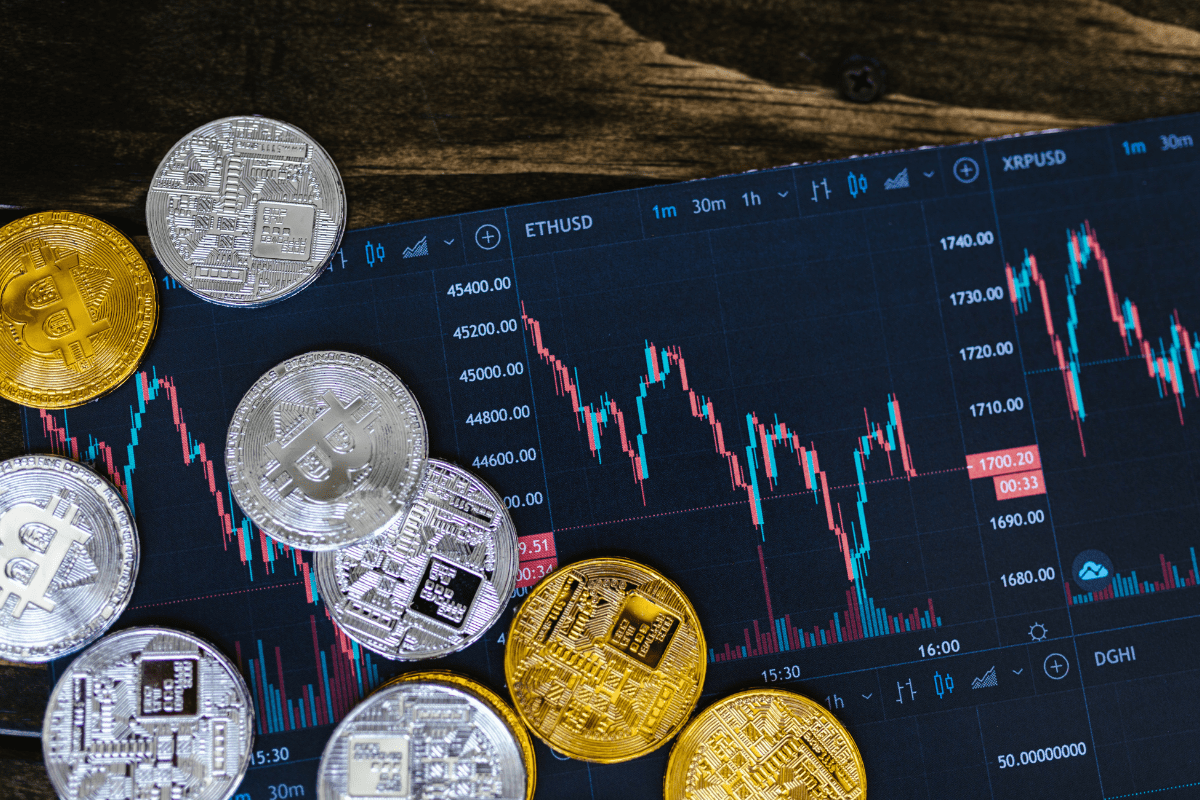
    Bitcoin is super volatile, which is great on the way up and terrible when it falls after you have just bought it. Here are some important figures which tell you about Bitcoin’s volatility.

    2009 – 2017 little price movement

    Autumn 2017 the price rises

    October 2017 $5,000

    November 2017 $10,000

    17th December 2017 $19,783

    April 2018 $7,000

    November 2018 $3,500

    14th March 2020 $5,165

    It has bounced again in recent weeks and is now at $40,714 as I write this article (9th Jan 2021). Institutional investors (fund managers, hedge funds etc) are now buying Bitcoin. Increased demand of a fixed supply commodity pushes up the price. Will this last? I do not know. Is it a bubble? Again, I do not know. However, what I do know is that institutional investors invest to a plan. They systematically take profits i.e. sell some of their holdings. They are disciplined. They manage risk by keeping a balance of different investments. Should these institutional investors take profits, other fund managers will follow and sell so as not to get caught out by a large price fall. Their careers depend on getting it right. The ability to feed their family depends on it. They analyse, have large teams doing research, watch and wait before buying and sound out other professional colleagues to ensure they sell in a timely manner. The field of behavioural finance has shown that as individual investors we use the part of our brain driven by emotion when making investment decisions, especially when there is a big price movement in an asset. This emotion based decision making often leads to poor decision making.

    This is why it is beneficial to speak with a professional financial adviser who can be more analytical!

    There is a body of opinion from Bitcoin exchanges and advocates that is putting forward the theory that Bitcoin is going to become a national currency in some countries and therefore the price is going to go ballistic (their phrase). It is unlikely that a non regulated, very volatile commodity will be used as a national currency.

    Here is an example from me of the practical problems. A solicitor practice in Barcelona started to accept Bitcoin for settlement of their fees. It looked like a superb idea to show they were a forward-looking firm.

    The problem comes with the volatility. Between issuing the invoice and payment by the client there is a delay. Having charged 1.03874 Bitcoins, for example, they had no idea how much they would get in the currency that would pay all the bills of the firm, such as their staff (Can we pay you in Bitcoins Mrs staff member? Ah, no!), electricity company etc. So having chosen 1.03874 Bitcoins as the fee because that would generate 4,000 in Euros, at the date of payment it could have been just €2,000 value. For this reason it is very unlikely that Bitcoin will become a national currency!

    If you wish to invest in Bitcoins, it is worthwhile separating them from your primary investments. Bitcoins will then not influence your investment decisions on your main portfolio in the way that they might be if they are on the same investment platform. How much should you invest in Bitcoin? Set aside a percentage of your savings and only invest that much. Whether it is 1% or 10% will depend on your overall circumstances. However, with Bitcoin it is very worthwhile applying the rule that only invest what you can afford to lose. That way, if you lose it all it has not damaged your financial wellbeing. If it goes up 400% next week, you will be able to take some profit and perhaps spend your winnings on something frivolous.

    Bitcoin profits will be taxed. Remember to put money aside from your winnings to pay tax. The amount of tax will depend on your country of residence. The annual declaration can be very difficult so keep track of all your transactions. A figure of 23% of the profit is a good guideline as the amount to put aside if you live in Spain.

    Practical Tip. A more mainstream alternative to investing in Bitcoin is the technology that Bitcoin is based on called blockchain. Blockchain has lots of uses and is good news. Uses include electronic voting in national elections, supply change management, payment systems, and anti-counterfeiting software. It can also allow companies to work together and share only what they need to for a specific project.

    As an example of what is possible, there are also many Blockchain propositions for supply chain management for Covid 19 vaccines and contact tracing. For more information on blockchain, you could read “Blockchain Revolution” by Don and Alex Tapscott. You can already find many investments to include in your main portfolio such as ETFs and funds. For more information on these funds email barry.davys@spectrum-ifa.com

    A final point on Bitcoin.  When someone sells a Bitcoin what does the buyer pay with? It is one of the major currencies. Sellers still want good old fashioned US dollars, Euros or Sterling when they part with their coin.  That tells us something!