Influencers – a job also at risk of AI
However, the influencer space may also be a ‘job’ under threat, with the rise in automated traffic, as explained above, this presents challenges to their economic model. Bots do not click on ads, which raises questions about how content creators can generate revenue in an increasingly bot-dominated landscape. As a potential solution they could charge bots for access to digital users’ content. Like every other employment, it will have to adapt to a rapidly changing future.
What the jobless numbers can tell us about the growth in AI
I will finish my section on AI with this, because it really puts into context why AI, robotics and automation are going to play an increasingly large part in our lives.
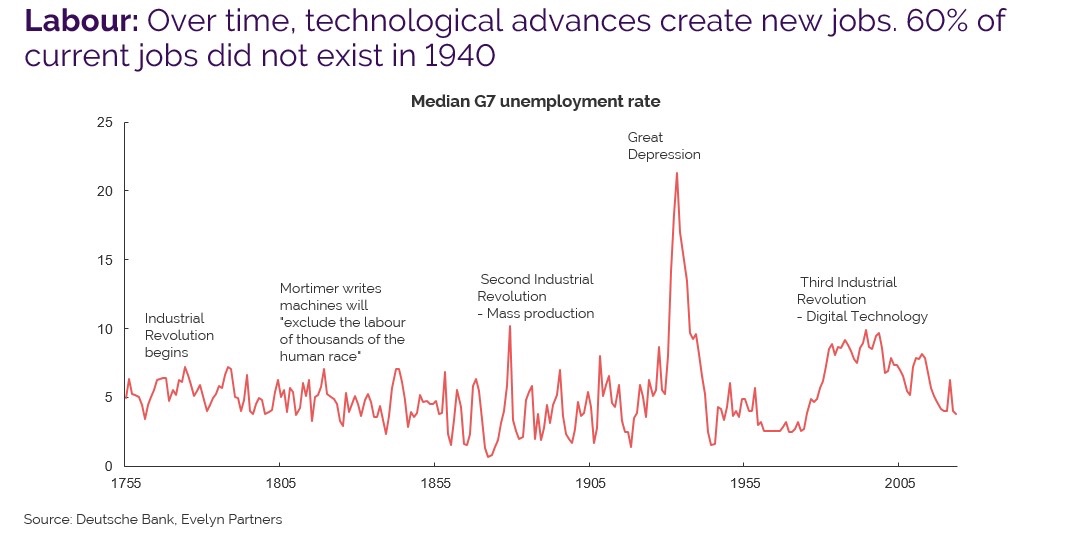
At the beginning of August new jobless claims were announced in the USA. New filings for unemployment benefits dropped to 187,000 for the week ending July 18 — a nearly 57-year low, and a much bigger drop than economists expected. This is probably not a cyclical blip. It’s demographics finally showing up in the data. Birth rates across the developed world — the U.S., Europe, Japan, China, South Korea — have been falling for decades, and it’s finally catching up. Fewer young workers are entering the work force every year than are retiring from it. This is basically a structural worker shortage, and jobless claims sitting near six-decade lows is exactly what you’d expect that shortage to look like on paper: a “low-hire, low-fire” economy where employers are desperate to hold onto the workers they already have. (I think about our friends in N.Italy who run a number of bars and they can never find trained staff and spend most of their time interviewing, hiring and firing. It has become their biggest headache). However, a labor shortage this bad can’t be solved through immigration, fast-enough, to mitgate your way out of a birth-rate collapse, and you definitely can’t train workers who don’t exist.
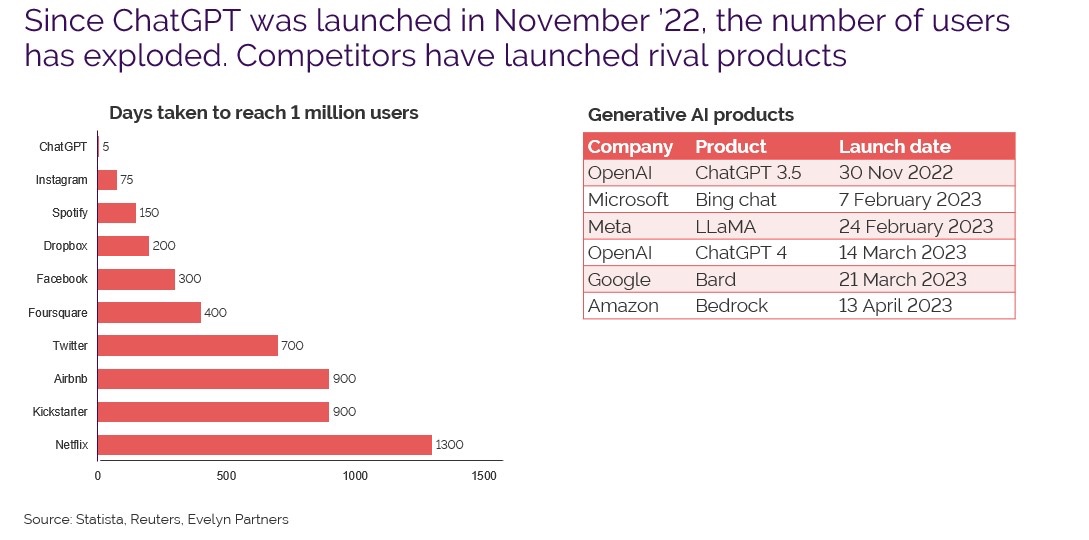
The only option left is productivity — which means robotics, automation, and AI aren’t optional anymore. They’re the only way to keep the economy growing when the number of available humans is shrinking. That’s why capital is pouring into automation and AI — this is not an passing fad, this is the innovation cycle!
Is this an investment opportunity?
Many of you have quoted me headlines that there is an AI bubble just waiting to burst and that a market crash will be lead by over speculated AI stocks. There is probably some truth in the fact that there are companies out there who have overly inflated valuations due to the hype around AI. However, the question is whether a revaluation of these stocks alone would be enough to generate a full market crash, or maybe a correction.
Major innovation cycles have never been cheap, and they’ve never been non-inflationary. Every prior boom — the 1970s energy and productivity shock and others — was accompanied by a commodity repricing. Building new infrastructure and new machines at scale means real demand for real materials.
Put it all together: a demographic worker shortage forcing an automation super-cycle, requiring a huge amount of hard assets (commodities) to build it all out. The smart money has already moved away from the speculative AI firms who may see a revaluation sometime soon, into the resource based companies who are going to be building the infrastructure to take us into this innovation era.