
Geopolitics and Oil Prices
Over the past couple of weeks I’ve received a number of questions from concerned clients about the latest geopolitical developments and what they might mean for markets.
Tel: +34 93 665 8596 |
info@spectrum-ifa.com |


By Peter Brooke
This article is published on: 14th March 2026
Over the past couple of weeks I’ve received a number of questions from concerned clients about the latest geopolitical developments and what they might mean for markets.
Whenever headlines become intense, it can understandably feel as though something dramatic must be happening in financial markets as well. The reality is often more nuanced — and this appears to be one of those moments.
Markets have reacted to rising geopolitical tensions, but the moves so far suggest caution rather than panic.
The key variable investors are watching is energy prices. Historically, bear markets tend to be linked to recessions, and the main risk from the current conflict is whether sustained oil price increases could slow economic growth.

Recent tensions in the Middle East involving Iran, the United States and Israel have dominated global headlines and created understandable concern among investors.
When events escalate quickly, it is easy to assume markets will react dramatically. Yet the response from investors so far has been far more measured. Markets have certainly moved, but the behaviour looks much more like caution than panic.
The real question investors are asking is not simply what is happening geopolitically — but whether it could become an economic shock.
So far, markets appear to be adjusting to geopolitical risk rather than assuming it will derail the global economy.
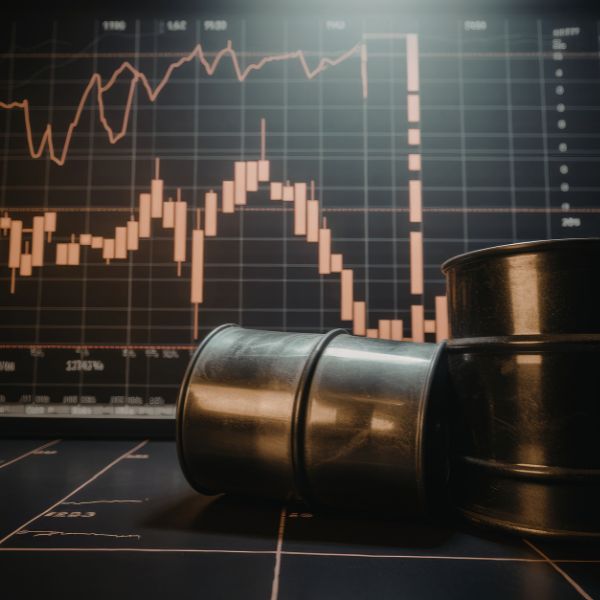
The most immediate reaction has been in energy markets.
Oil prices briefly surged as investors priced in the risk of supply disruption through the Strait of Hormuz, one of the most important shipping routes in the global energy system. At one stage prices approached $120 per barrel, before retreating to below $90, still significantly higher than the $65 level seen at the end of February.
This sensitivity reflects the strategic importance of the region. Roughly 20% of global oil supply normally passes through the Strait of Hormuz, meaning even temporary disruption can move prices quickly.
Equity markets have moved lower, although declines have been relatively contained. Across developed markets, equities have generally fallen between 2% and 6%, while emerging markets have seen slightly larger pullbacks due to their greater reliance on imported energy.
Safe-haven assets have also seen some demand. The US dollar strengthened, while gold briefly rose above $5,400 per ounce before easing again.
Despite dramatic headlines, the overall reaction has remained relatively orderly. As LGT Wealth Management noted in a recent update:
“While the headlines have been dramatic, market moves so far suggest investors are reacting with caution rather than panic.”
Interestingly, much of the volatility has occurred beneath the surface of markets. The Rathbones multi-asset team recently highlighted that while headline equity indices have only fallen around 3–4%, there has been significant rotation between sectors and individual stocks.
Chris Saunders of New Horizon Asset Management also notes that the conflict is beginning to affect other parts of the global economy. Disruptions to Iranian production have tightened fertiliser markets, pushing prices higher and raising the possibility that food prices could also rise in the months ahead.
When geopolitical crises occur, investors tend to focus on one key question: Could this trigger a recession?
This distinction is important because historically bear markets (defined as a fall of 20% or more in stock markets) tend to occur when the economy enters a recession, rather than simply because geopolitical tensions increase.
One of the main channels through which geopolitical events can affect economic growth is energy prices. Economists often use a simple rule of thumb: every $10 increase in oil prices can add roughly 0.3% to inflation and reduce economic growth by a similar amount.
With current expectations for US economic growth around 2.2%, oil prices would likely need to rise well above $120–$130 per barrel and remain there for a sustained period before recession risks became materially elevated.
At present, prices remain below those levels.
However, as Chris Saunders notes, the key variable may be how long the conflict continues, as prolonged disruption to Middle Eastern energy supply could delay interest-rate cuts and keep inflation pressures elevated.

This helps explain why markets have responded cautiously rather than dramatically.
Periods of geopolitical tension can certainly create short-term volatility, but they rarely change the long-term trajectory of global markets unless they spill over into the broader economy.
Portfolio managers also emphasise the importance of remaining disciplined during periods like this.
As one Rathbones portfolio manager noted in a recent discussion:
“What was a good company before the weekend is still a good company afterwards. The share price may now be lower — which can create opportunities.”
Similarly, the investment team at Atomos emphasised that predicting short-term market movements during geopolitical crises is extremely difficult, reinforcing the importance of maintaining diversified portfolios designed to withstand periods of uncertainty.
Energy shocks can also accelerate structural change. Previous crises — including Europe’s energy shock following Russia’s invasion of Ukraine — helped accelerate investment in renewable energy, batteries and alternative energy systems.
• Markets have reacted with caution rather than panic despite dramatic geopolitical headlines
• Oil prices remain the key variable investors are watching
• Historically, bear markets are far more closely linked to recessions than geopolitical events alone
• Current oil prices remain below levels historically associated with recession risk
• Maintaining a disciplined, diversified investment strategy remains the most effective approach during volatility
Geopolitical developments will inevitably continue to evolve over the coming weeks. However, markets so far appear to be adjusting rather than overreacting.
History repeatedly shows that while headlines can move quickly, markets often prove more resilient than expected.
I hope you found this update interesting and helpful.
If anything has raised questions for you, or you’d simply like to talk something through, please don’t hesitate to get in touch. That’s exactly what I’m here for.
Please complete the form below: