The UK’s latest budget announcement has ushered in significant reforms that could transform how British expats manage their pensions and inheritance tax (IHT) liabilities.
Changes to inheritance tax and pensions for expats
By Portugal team
This article is published on: 22nd November 2024

These changes, particularly impactful for long-term expatriates, redefine key aspects of domicile, residency, and asset protection. Here’s what you need to know that will affect British expats and why understanding the changes is critical.
From Domicile to Long-Term Residency: a seismic shift
Historically, the concept of “domicile” has been central to determining UK IHT obligations for British citizens. Many expats found that, despite decades abroad, they were still deemed UK domiciled, exposing their global estates to IHT.
The new rules mark a major shift, particularly impacting British expatriates who have been living overseas for extended periods, replacing the concept of domicile with new long-term residence (LTR) rules. Under these new rules, the test for liability to UK IHT will be based on residency.
Those who have lived outside of the UK for at least 10 of the last 20 years will now be classified as non-UK long-term residents. This change means their global assets (except UK based holdings such as pensions, property, investments) will be exempt from UK IHT.
Therefore, expats intending to remain out of the UK for extended periods of time should seriously consider moving assets outside of the UK.
If an individual does not meet the non-residency criteria at death, their entire estate remains subject to UK IHT and the usual rules, exemptions, and tax rates apply.
New incentives: tax breaks on return to the UK
The budget introduced two noteworthy provisions for British expats considering a return to the UK:
1. Four Years of Tax-Free Foreign Income and Gains: The Foreign Income & Gains (FIG) rules allow non-UK LTRs returning to the UK to enjoy tax-free treatment on income and gains from overseas assets for up to four years.
2. 10-Year IHT Exemption: Returning expats can benefit from a 10-year IHT exemption on non-UK assets, provided they are are still classified as non-UK LTRs at the date of death. After this 10 year period, full UK LTR status applies, reinstating IHT liability on worldwide estates.
Pensions, QROPS & QNUPS – what has changed?
Under the revised rules, expats who have previously relied on UK pensions and offshore pension schemes such as Qualifying Recognized Overseas Pension Schemes (QROPS) and Qualifying Non-UK Pension Schemes (QNUPS) to protect their wealth will no longer be sheltered from UK IHT if deemed UK LTR at death.
Moreover, those who are non-UK LTR at death, but still hold UK based pensions will still suffer UK IHT on the pension as it is a UK situ asset.
An added element is how pensions interact with the Portuguese Non-Habitual Residence (NHR) regime and how, once the scheme ends, pension are generally taxed at scale rate of income tax (up to 53% with solidarity taxes).
Therefore, Portuguese residents with or without NHR who are holding UK, QROPS and QNUPS pension holders should revisit their pension planning.
Double whammy tax – 85%
Where death of the pensioner occurs before age 75, beneficiaries receive UK and overseas pension income tax free and post age 75, the beneficiary is taxed at their marginal rates of income tax. There have been no changes to these rules.
However, with the introduction of IHT to pensions, where death occurs after age 75, beneficiaries could be hit with a “double whammy” of 40% IHT and then income tax up to 45% on any drawdown.
Expats holding pensions should therefore be aware of this potential for double taxation and consider restructuring options for their intended beneficiaries.
Other benefits for expats
Most Brits will be aware of the “7 year rule” when making gifts during their lifetime, whereby there is the potential for the gift to be brought back into the UK IHT net if death occurs within 7 years.
An interesting outcome of the budget is, where a non-UK LTR gifts a non-UK asset, the gift is immediately exempt from UK IHT. There is no 7 year waiting period. Moreover, if the donor subsequently returns to the UK this gift will remain outside of the scope of UK IHT, even if death then occurs within the 7 years or the donor becomes a UK LTR again.
Final word
The sweeping changes underscore the importance of careful financial planning for British expats.
Restructuring assets and revisiting long-term strategies are crucial steps to minimise IHT, income and capital gains tax exposure, and to optimise tax efficiency, and those who are intending to be long-term, or permanent expats should certainly revisit their affairs in light of the new changes.
If you would like to discuss your position in detail, please contact us for a confidential and complimentary meeting.
The Spectrum IFA Group Title Sponsor of The Nations Cup at Royal Malta Golf Club
By Craig Welsh
This article is published on: 12th November 2024

Some big news coming from our Malta office.
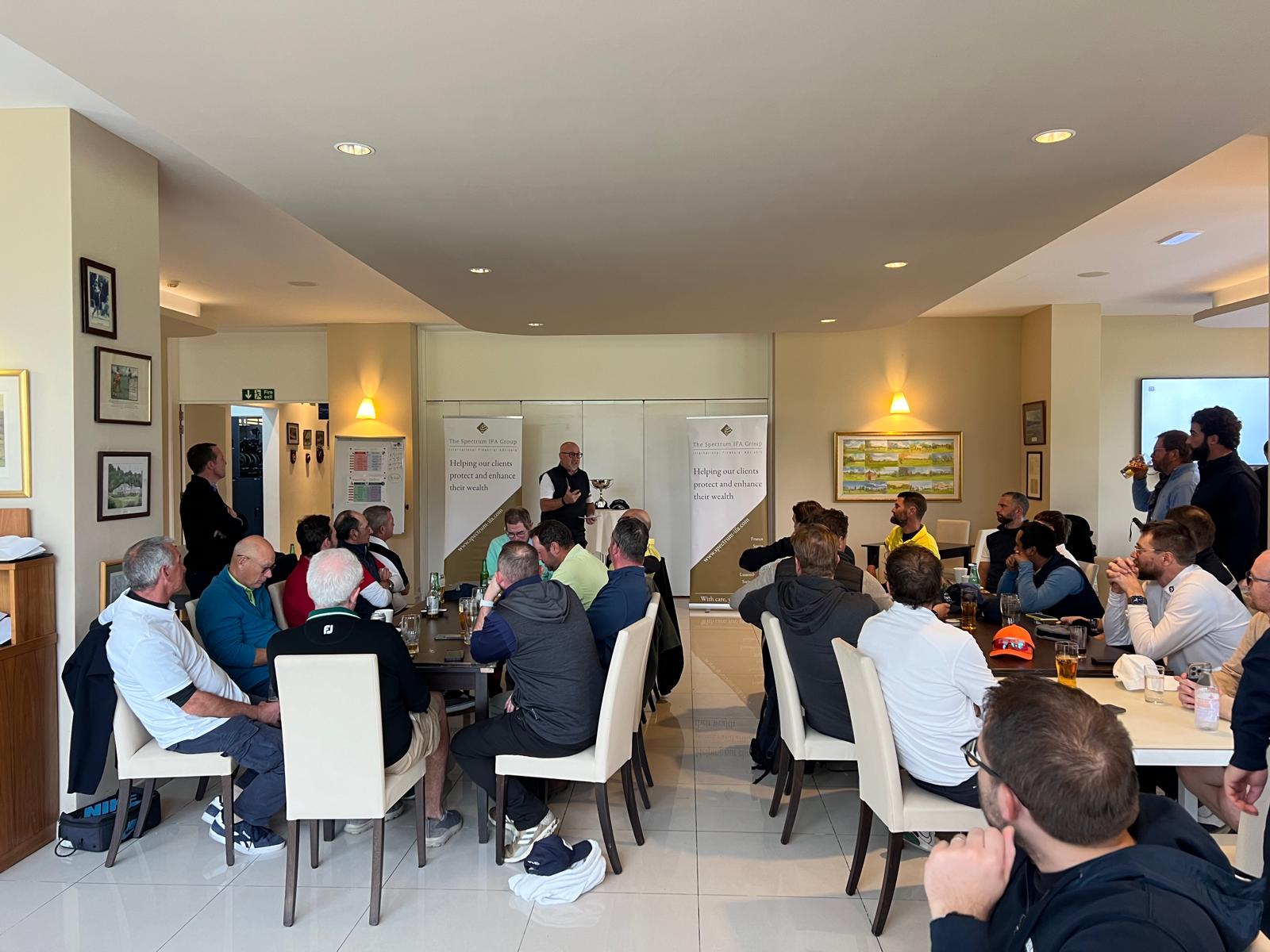
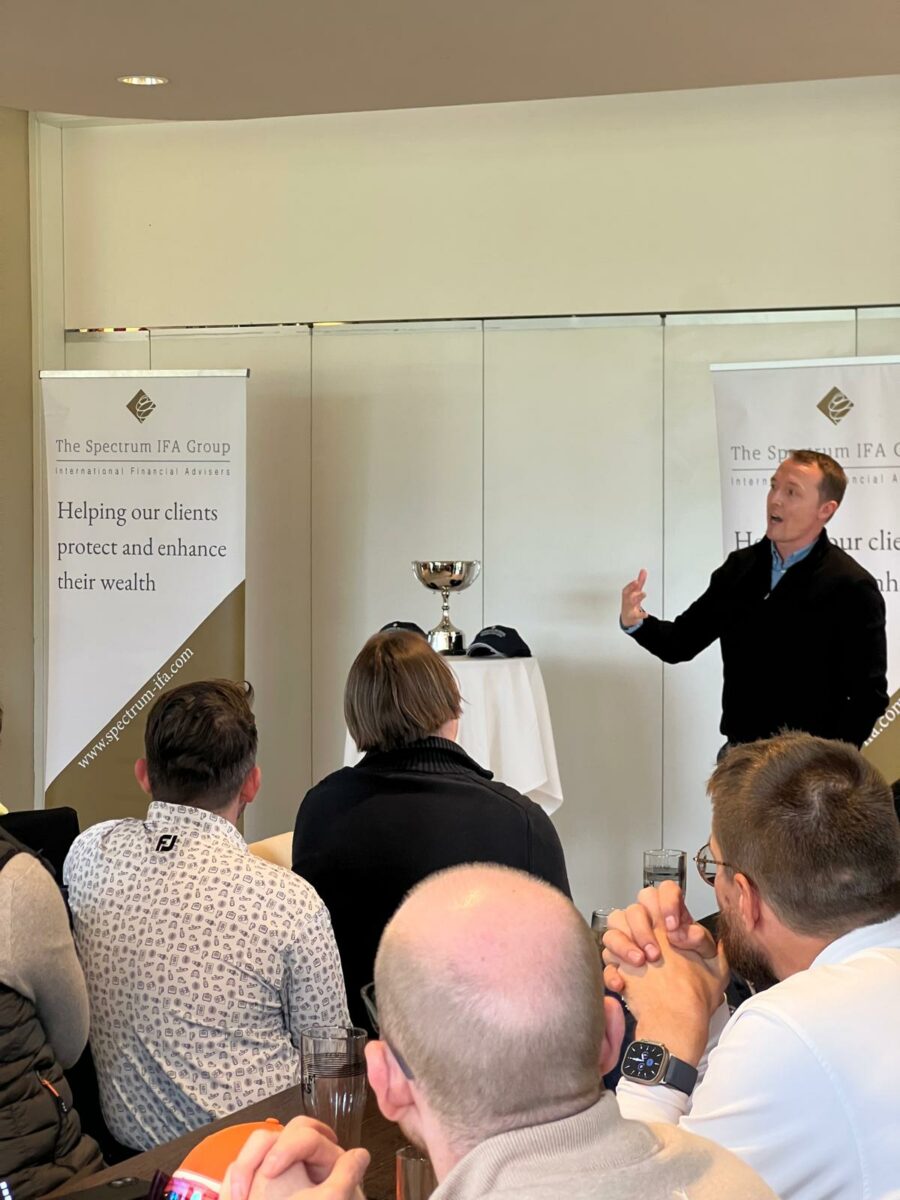
The Spectrum IFA Group, thanks to the efforts of our branch manager, Craig Welsh, will be the main sponsor of the Nations Cup.
The Nations Cup will be organised by the Royal Malta Golf Club, teeing off in December 2024. This will be a 3 matchday competition between teams representing Malta, GB & Ireland, Scandinavia and Nordics, and The Rest of the World.
This year’s innagural event will feature Spectrum IFA Group as the title sponsor, bringing a new level of excitement and international flair to the club. Known for delivering tailored financial planning services to expatriates across Europe, The Spectrum IFA Group is a fitting partner for an event that celebrates global connections and international sportsmanship.
The Nations Cup is set to become a highlight in the RMGC golf calendar, featuring teams from Malta, Great Britain and Ireland, Scandinavia and the Nordics, and a collective team from “The Rest” regions. This competition will foster camaraderie and regional pride as these diverse teams vie for victory.
We feel that Spectrum IFA Group is a fitting partner for an event that celebrates global connections and international sportsmanship. We look forward to the camaraderie and regional pride, as these diverse teams vie for victory on Malta’s greens!
We are looking forward to a successful event.

Succession and Domicile Planning in Portugal
By Portugal team
This article is published on: 4th November 2024

Are you interested in learning more about Succession and Domicile Planning? Join us at our free to attend educational workshop on 7th November, where our speakers will be discussing the 2024 tax landscape, retirement planning options, investment solutions and tax strategies for expatriates living in Portugal.
The workshop will cover:
- Portuguese and UK inheritance taxes: thresholds, rules and allowances
- Succession laws: UK rules, Portugal and forced heirship, Wills and Brussels IV
- IHT mitigation strategies and planning ideas
- Gifting: thresholds, rule and avoiding IHT clawback
- QNUPS: does it really shelter UK IHT in practice
- How to protect family wealth, your beneficiaries and bloodline planning
- How to control family wealth during your lifetime and after your demise
- Open Q&A throughout
Succession and Domicile Planning Workshop
7th November 2024
Date: 7th November
Time: 10am-1pm
Venue: Wyndham Grand Algarve
Quinta do Lago, Av. André Jordan 39, 8135-024 Almancil

Pension Planning and Income Generation Workshop
27th November 2024
Date: 27th November
Time: 10am-1pm
Venue: Wyndham Grand Algarve
Quinta do Lago, Av. André Jordan 39, 8135-024 Almancil

The workshop will cover:
- How different types of pensions are taxed in Portugal
- Where tax should be paid on different types of pension income
- Double taxation and how to avoid it
- Drawdown options and the tax implications
- UK pension changes: LTA abolition, impact on taxation
- Tax planning opportunities: Pre-April 2025 planning window
- QROPS & QNUPS: Do you really need one or should you keep your UK pensions?
- How to pass on your pensions and the implications for your beneficiaries
- Open Q&A throughout
Update on UK pensions when living in Spain
By Barry Davys
This article is published on: 4th November 2024

During the Brexit negotiations, many of us Brits living abroad were concerned about our fate following March 2019. Thankfully, Britain and the EU reached a solid agreement about the rumoured ‘freezing’ of the state pension after Brexit, and the result is very positive indeed – state pensions will continue to increase for those of us living in the EU.

To read the full article please click here www.telegraph.co.uk/pensions-retirement/news/britain-eu-reach-agreement-expats-state-pension-brexit/
Further to the post above about the UK State pension. Here is how helpful this agreement to increase pensions has been. All figures per week
- 2017 – £159.55
- 2018 – £164.35
- 2019 – £168.60
- 2020 – £175.20
- 2021 – £179.60
- 2022 – £185.15
- 2023 – £203.85
- 2024 – £221.20
- 2025 – Budget announcement £230.30 (has to be confirmed by Parliament)
At a time that is convenient for you
Nice-Cannes Marathon 2024
By Peter Brooke
This article is published on: 2nd November 2024

Run with Purpose: Peter Brooke and The Spectrum IFA Group Take on the Nice-Cannes Marathon 2024!
On November 3rd, Peter Brooke from The Spectrum IFA Group will proudly run with The Run for Hope Team in the Nice-Cannes Relay Marathon. For years, Peter and Spectrum have embraced this challenge, raising awareness and funds for a cause that deeply resonates with them.
The Run for Hope team, is a partnership between Mimosa and Cancer Support Group 06, brings together a community of runners from beginners to experts, inspiring teamwork and fun to raise funds for cancer support by running in the Nice-Cannes Relay Marathon. Participants enjoy comprehensive training, support and a festive after-party, all contributing to a great cause, the support of cancer patients on the French Riviera.
As experts in financial planning for English speaking expatriates living in Europe, The Spectrum IFA Group provides comprehensive and personalised financial advice, and planning. Peter, who has been with Spectrum for 20 years on the French Riviera understands the complex financial and tax issues his clients face and he and Spectrum are dedicated to helping you navigate these challenges.
By participating in the relay marathon, Peter and Spectrum demonstrate their commitment to the broader community on the Côte d’Azur. Supporting The Run for Hope Team allows them to blend their professional expertise with their passion for making a difference. Cheer on Peter and the whole Mimosa team as they run for hope, showcasing the same dedication they bring to managing your finances.
Together, we can achieve great things—both on the marathon route and in your financial journey!
The Spectrum IFA Group: Running for Hope, Running for You!

The relationship with a financial adviser
By Victoria Lewis
This article is published on: 31st October 2024

The majority of individuals that receive professional financial advice across the UK have remained with the same adviser throughout, a new study by St. James’s Place (SJP) reveals, highlighting the power of longstanding advice relationships. Just under 12,000 UK adults were surveyed this year and the results show financial advice and guidance can benefit immensely.
More than 62% have never switched their financial adviser, rising to nearly 75% for those aged 35 and over.
The study also found that the typical relationship with a financial adviser or advice firm lasts around 7 years, but this increases to over a decade for those aged 55 and over – with nearly 31% of this generation having been with their adviser for 16 years or more.
Trust, understanding and financial satisfaction are the main reasons for never switching financial adviser:
• Trusting their adviser
• Being happy with the advice and financial returns their adviser has delivered
• Their adviser understanding their financial situation
• Having a good relationship with their adviser which has been built over several years
• Their adviser understanding their long-term goals and helping to deliver them
• Their adviser looking after both them and their family
• Their adviser having helped them through big life stages/ moments

SJP said: “Financial advice is about much more than numbers on a page or graphs on a screen.
It’s about building deep, meaningful relationships, and as our research shows these can last many years and span generations.

Whether you’re navigating the early stages of wealth creation, planning for retirement, or managing an unexpected life change, having a trusted adviser by your side can make all the difference.
These were the main reasons cited for working with a financial adviser on an ongoing basis:
• Putting the foundations in place for a stronger financial future
• Helping them to save more money for retirement
• Ensuring they have adequate protection in place if they need it
• Getting on the property ladder
• Navigating difficult periods like divorce or bereavement
• Pass on money to their children or loved ones
• Better manage the cost of raising children
• To provide more financial support to elderly family members
Andy Payne continues: “These goals, moments and milestones may be common to many throughout their lives, but the specific circumstances will always be unique. Having support from an expert financial adviser, with not just the technical expertise but the empathy to deploy it sensitively and with their clients’ needs in mind, can be the difference between a hope dashed and a dream realised.”
If you have already have a financial adviser but doubt if they are the right person for you, perhaps it’s time for a change?
Or perhaps have you been struggling to navigate your financial planning on your own?
I have worked with Spectrum as an International Financial Adviser for over 21 years and still look after my clients who worked with me from the very beginning. I advise the children of my clients now and even other family members too.
The synergy I have with my clients is because we understand each other – our relationship is based on trust and confidence and I know it’s an enjoyable experience because they recommend me to their family and friends. That’s the greatest endorsement I could wish for.


ECB Rate Cuts
By Spectrum IFA
This article is published on: 30th October 2024

June, September, and now October. The European Central Bank (ECB) has lowered the interest rate by 25 basis points, marking its third rate cut in 2024 and the second consecutive reduction—a sequence not seen in 13 years (see graph).
Inflation is now at 1.7%, its lowest level since April 2021 and below the 2% target.

The ECB’s last meeting of the year will be on December 12th . Monetary analysts predict four more rate cuts by mid-2025, to be followed by a period of stability. According to the ECB’s survey, marginal rate adjustments could occur in 2026, especially in the first half, which would bring rates to around 2% for that year.
As a result, the Euribor has declined. In October, the monthly Euribor rate stood at 2.711%, a decrease of 0.225 points from the previous month’s 2.936%. Starting 2024 at 3.609%, the Euribor has accumulated a total drop of 0.898 points over the year, as illustrated in the accompanying table and graphs.

As a result, we are starting to see a reaction from the banks. With inflation now at a low and the Euribor experiencing steady declines, further cuts are expected into 2025. This trend has prompted a cautious response from banks, which are gradually reducing interest rates. As the ECB signals possible marginal adjustments by 2026, the Eurozone may enter a phase of rate stability, providing a potentially favourable environment for both borrowers and lenders.
Should you have any inquiries regarding the content of this article, or any other questions relating to mortgages in Spain, please do not hesitate to reach out to us for further information.
Patricia Nadal
spain@spectrum-mortgages.com
French Bank Accounts
By Occitanie
This article is published on: 22nd October 2024

Back to basics – an overview of some French bank accounts.
French Interest-Paying Bank Accounts
Whether your level of savings is modest or if your financial circumstances are more comfortable, we recommend that everyone considers using one or more of these accounts available from all banks in France.
These accounts pay interest and there are several available, depending on your circumstances, all providing a modest risk-free return on your savings.
In addition to paying interest on funds deposited, the other benefit common to all these accounts is that the interest payable is exempt from tax and social charges.
Livret A
Eligibility: Open to everyone with a minimum deposit of €10 (only one account per person) and offered by all banks. There are no requirements in relation to age, nationality or tax residence.
Permitted Value: Once the balance of the account reaches €22,950 (whether by deposits or interest or a combination of both), no further deposits can be made but interest can take the balance beyond this maximum.
Current Rate of Interest: 3% per annum
Livret de Développement Durable et Solidaire (LDDS)
Eligibility: Available only to adults who are tax resident in France and offered by all banks. Only one account per adult and no more than two accounts per tax household.
Permitted Value: Once the balance of the account reaches €12,000 (whether by deposits or interest or a combination of both), no further deposits can be made but interest can take the balance beyond this maximum.
Current Rate of Interest: 3% per annum
If you are an adult tax resident in France, it is possible to hold one each of the above. For example, a married couple can hold two Livret A and two LDDS accounts between them with a maximum deposit of €69,900.
Livret d’Epargne Populaire (LEP)
Eligibility: Available at banks, this account is specifically for those on more modest incomes. This account is only for adults and those who are tax resident in France with a limit of two accounts in a tax household.
As this account is focussed on those on modest incomes only, income ceilings apply. If opening an account in 2024, your tax income in 2023 will be referenced. For example, for a 1-part tax household, the ceiling is currently €22,419 and for a 2-part tax household, €34,393.
Permitted Value: Once the balance of the account reaches €10,000 (whether by deposits or interest or a combination of both), no further deposits can be made but interest can take the balance beyond this maximum.
Current Rate of Interest: 4% per annum
Livret Jeune
Eligibility: This account is reserved for young individuals between the ages of 12 and 25 years. An account can be opened with a minimum deposit of €10 with funds freely available from the age of 18 years. Up until the age of 16, minors must obtain the authorisation of their legal representative to make a withdrawal and between 16 and 18 years of age the legal representative has the right to object to a withdrawal request. Only one account is allowed per person.
Permitted Value: Once the balance of the account reaches €1,600 (whether by deposits or interest or a combination of both), no further deposits can be made but interest can take the balance beyond this maximum.
Current Rate of Interest: The current rate of interest can be set freely by the bank but must be no lower than that of the Livret A (currently 3% pa).
The accounts outlined above are always worth using for immediately accessible funds which provide a return which is exempt from tax and social charges, however, the interest rates currently available are the highest for years and will start to decline, with a first reduction likely in January 2025.
Next time
In our next article we will focus on savings/investments where no limits on the investment value exist and where the potential for greater returns is possible. With additional benefits, including tax efficiency and significant inheritance benefits, all roads lead to the Assurance Vie!
If there are any subjects you would like us to cover in one of these articles or if you would like to contact one of our advisers for a financial consultation (no fee), then please get in touch at info@spectrum-ifa.com
Top Financial Tips in Spain
By Chris Burke
This article is published on: 16th October 2024

I am guessing most of us are back in the old routine after summer (sorry to tell you that the summer is now over, even if you don’t want to hear it!) – How quickly do the hours/days/weeks/months/years/life go by….it only seems like yesterday I was starting out in my career, now I am the wrong side of ………something!
I myself don’t have that long to go until I retire. It never is too late to start your financial planning but the sooner you do it the easier and more fruitful your finances should be. Do I ‘practice what I preach’ and take the advice I pass on to others? Absolutely! That’s another reason why I am best placed to give the advice……..
This month we are focusing on the following investment planning tips to inspire you to get organised financially and feel good about it:
- Making sure you have a ‘Plan’ for your savings and investments
- Use the ability to offset, defer and mitigate tax for your investments/savings
- Using your investments to pay for future children’s expenses without paying any savings/gains tax yourself
- Investment quiz – what’s most important to you with your money?

Making sure you have a ‘Plan’ for your savings and investments
Managing your personal finances should be just as, if not more, important than managing your work or business role – You should make sure you are achieving your set objectives, regularly reviewing along the way to make sure you are hitting your targets, goals and aspirations for life. Apart from your health and family, what could be more important than that?
Imagine if you received one EXTRA annual bonus each year, for the whole of your working life, how much difference would that make to you? Then, investing that prudently over your working life to provide for your family and retirement? With some knowledge, know-how and someone to guide you along the way and making sure you regularly review, in the good and bad times, that this can be achieved.
Use the ability to offset, defer and mitigate tax for your investments/savings
Alongside making your monies work and grow for you, being smart with your tax situation will make sure that those ‘hard earned gains’ you have achieved over the years, when you need them most in retirement, are subject to the least amount of tax, legally.
For decades those ‘in the know’ have used tax experts and legal teams to makes sure they pay the minimum amount of tax possible, which can make an incredible difference to your wealth – This is a major area we focus on with our clients’ investments/portfolios. Investments set without professional advice, for example via on-line platforms or banks, are normally nowhere near as tax efficient as those established with the help of an experienced financial planner.

Using your investments to pay for children’s future expenses without paying any taxes yourself
“At what age are children financially independent?” I hear some parents say. In my experience it can be never…….however, many of my clients plan to support them financially for their education and university fees, if possible. Parents are then very surprised to hear that rather than pay the tax themselves on their investment gains for these future expenses, they can arrange (with proper financial planning) that their children can, if they wish, receive income from these investments directly. This means any tax due would come under the children’s tax bracket, instead of the parents’ – which can make a significant difference to the tax payable in total, but particularly for the parents.
Investment quiz – what’s most important to you?
Many people get in touch with me when they feel they need help with investment planning and advice, however that is not always the case. Sometimes, after reaching out for a different reason and talking their situation/aspirations through, they then decide they want to set up an investment strategy.
But how do you decide whether investing is right for you? I have compiled below the following questions in two columns – If you agree more with those in column A than B, then you should strongly consider getting in touch to discuss investment plans and strategies:
| A | B |
| You want your money to grow and give you greater wealth in the future | Keep your money accessible in case it’s needed, knowing it will not grow and keep up with inflation, but you have instant access |
| You would like to have a financial plan/strategy keeping some money accessible, but also make sure your other monies are ‘working’ for you, increasing your wealth and finances over the years | Employ all of your spare money into paying off your mortgage early, then look at your retirement investment strategy (click here to read whether it is best to do this or not). |
| Retire early using FIRE (Financial Independence, Retire Early) - early being well before the typical retirement age of 66. | Not retire early, enjoy life fully now and see what happens when you get to retirement |
If you would like to discuss any of the topics above in more detail or you would like to have an initial consultation with Chris to explore your personal situation, you can do so here.
Click here to read independent reviews on Chris and his advice.
If you would like any more information regarding any of the above, or to talk through your situation initially and receive expert, factual based advice, don’t hesitate to get in touch with me.
Wealth taxes in Italy
By Andrew Lawford
This article is published on: 15th October 2024

If you follow Italian media reports, you may have picked up on the idea that a one-off wealth tax may be on the way to help lower the levels of government debt.
It probably comes as no surprise that Italy has a long history of over-promising and under-delivering when it comes to reducing its debt levels. If a picture is worth a thousand words, then the graph below shows how each budget forecast (dotted lines) promised a reduction in the ratio of Debt/GDP, whilst the actual level (solid red line) generally heads in one direction only.
Of course, the Debt/GDP ratio is one thing, the absolute level of indebtedness is quite another. I note with some uneasiness that over the last 20 years Italian Government debt levels have increased by almost 100% whilst nominal GDP has only increased by around 60%. Soon I fear that Italy will cross the threshold of €3 trillion in debt. That’s €3,000,000,000,000 for those who like lots of zeros.
Is a wealth tax a likely route to try and bring the public finances back into line? Italy has seen this sort of thing before, and the mention of a wealth tax (una patrimoniale) is enough to provoke any Italian who had a bank account at the time to start grumbling about the “patrimoniale del ‘92”, when Giuliano Amato, the recently appointed prime minister, did an overnight raid on Italian bank accounts, withdrawing 0.6% of the value to try and bolster the parlous state finances. Interestingly, Mario Draghi was Director General of the Italian Treasury at the time, apparently willing to do whatever it took even back then.
In considering the likelihood of new wealth taxes, it must be noted that Italian residents already suffer an annual 0.2% tax on the value of their financial holdings (either through stamp duties or the foreign assets wealth tax known as IVAFE). A one-off wealth tax of 0.6% would be preferable to 0.2% per annum in my opinion, but getting both would be a bit rough.
One must also consider the current political landscape compared with 1992. Back then, the system was beginning to crumble as the tangentopoli bribing scandal was getting started. This eventually led former prime minister Bettino Craxi to flee to Tunisia and brought about a supposed cleansing of the political classes dominant in the post-war period. The new system, known as the Second Republic, continues to this day and is currently dominated by Giorgia Meloni. Notwithstanding her somewhat inauspicious background and the fact she is surrounded by a cast of more or less unsavoury individuals, she has managed to convince the world that she is a force for good. My own view is that she is an able political operator and figured out fairly quickly that, if you play by the rules of modern conservatives, you get invited to far better parties – have a look at this video from the Atlantic Council who recently gave her the Global Citizen Award. From minute 1.30 you can hear what Elon Musk has to say about her.

As far as Meloni’s attitude towards raising taxes, she has recently declared them to be una cosa di sinistra (a left-wing thing), presumably meaning that any dirty work of raising extra taxes will be left to a technocrat like Mario Monti or Mario Draghi at some point in the future.
Whatever the case, it is always prudent to maintain a solid asset base outside of one’s country of residence and it should be clear that any overnight raid on financial assets could not include those deposited outside the Italian financial system.
Foreign assets may well be dragged into the tax net in other ways, of course, but at least you won’t wake up one morning suddenly poorer than when you went to bed. In extreme circumstances, which admittedly are almost unimaginable for the moment, capital controls and the like could severely reduce your financial flexibility in the event that all your assets were held in Italian financial institutions. This may seem like scare-mongering, but remember that the unthinkable has happened in the EU in recent memory, so it pays to be prepared. If the weather is uncertain (and when is it not?) then it’s always a good idea to have an umbrella with you. If you end up not needing it, all the better.
If you feel like discussing your own financial set-up to see if it can be improved, then do get in touch. I’m happy to provide a no-obligation consultation to discuss any concerns you might have and the options you have available.