Retirement options
One of the big differences when you move to Spain are the options available to you for retirement planning. In the UK/Ireland we have ISAs and private/employer pension schemes which both offer good tax savings.
By Chris Burke
This article is published on: 8th February 2023

One of the big differences when you move to Spain are the options available to you for retirement planning. In the UK/Ireland we have ISAs and private/employer pension schemes which both offer good tax savings.
ISAs are not tax free in Spain, and the annual ‘private pension allowance’ is only €1,500 per year per person! In some employer contribution schemes you can save up to €10,000 per year, but these are very uncommon. Compare that to £40,000 per year in the UK, or in Ireland up to €115,000 per person, per year! €1,500 per year is never going to achieve any serious amount of income for retirement.
The main reason for this is that in Spain, culturally people preferred to set up a company structure or accrue properties, passing these from generation to generation. Additionally, there is a lack of incentives from the authorities to entice people to save into retirement schemes.
Pensions have been popular for retirement in the UK/Ireland because of the tax savings and potential employer contributions. Take both of those away and they are not nearly as effective, which is what happens when you move to Spain. So, what can you do if you want to plan for retirement in a tax efficient manner?

For me, retirement is not just about a pension, it’s about a retirement plan. We help clients build that retirement strategy, taking into consideration the amount of income they want, making sure their assets are highly tax efficient (such as moving them away from future income tax positions) and then making sure everything is flexible and portable, because you never know what will happen in life. This is all done by using our client planning portal, where we work together to bring this to life using the following process:
This is all done by planning, where we work together to bring this to life using the following process:
We never know exactly what’s going to happen, but one thing is for sure, with proper informed planning and regular analysis, you will be much better prepared.
By Barry Davys
This article is published on: 24th January 2023

Husband 60, wife 60, married, with 2 children who are financially independent and living in the UK
👉 Pensions: £930k
👉 Investments £60k
👉 Cash Spain €60k
👉 House €1.25 M
👉 Wills – UK & Spain
👉 Cash UK £184k
Build Understanding of Pension Situation
Better returns on Non Pension monies
Forward Planning including Inheritance tax
✅ Clarity for clients and children on Inheritance Tax
✅ Improved return on bank accounts to 3.5% pa giving an improvement of 4,200 pa
✅ Removed pensions from UK Lifetime Allowance rules
✅ By providing documentary evidence from UK HMRC for Main Residence Nil Rate Band confirmed an inheritance tax saving of up to £140,000
✅ Improved widows pension by £7,000 pa
✅ Kept clients compliant with changing tax rules
✅ Answered the financial question “Am I going to be OK?” with a “Yes”
If you are a resident in Spain, or are planning to become a resident and would like any information on tax, pension transfers, investment planning or general financial planning you can contact me on:
barry.davys@spectrum-ifa.com or direct on 0034 645 257 525
By John Hayward
This article is published on: 19th January 2023

Valencia reduces allowance with more people having to pay
the Impuesto Sobre el Patrimonio
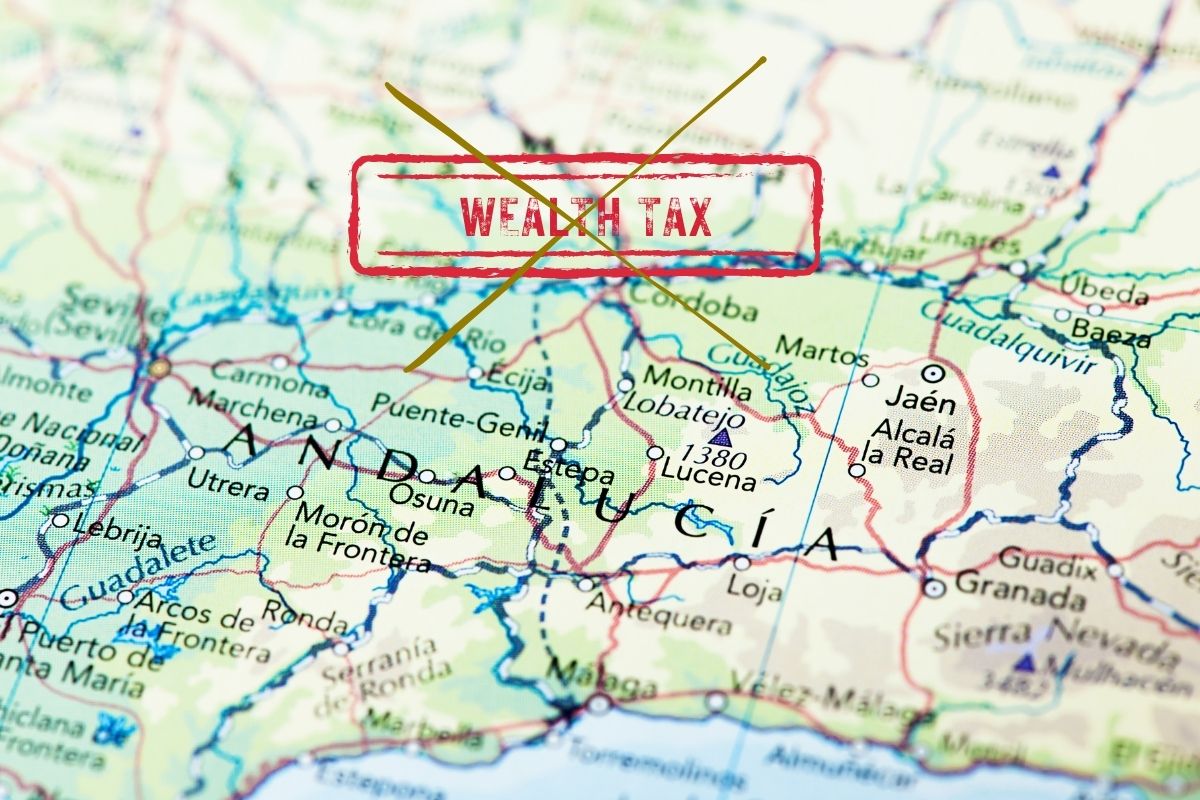
Further to my article from last week, and after consultation with our accountant associates, it appears that the main residence wealth tax allowance of up to €300,000 only applies after 3 years of living in the property (habitual residence). This has been questioned but, as is often the case in Spain, getting a response from the tax office can be tricky.
The tax office words that are relevant in terms of getting around this 3-year rule are “circumstances that necessarily require the change of housing”. Moving to Spain to retire or for a change of lifestyle would not generally tick that box. If there are justifiable health reasons or similar then that appears to be acceptable in terms of applying the allowance.
To emphasise the habitual residence aspect, from JC & A Abogados in Marbella: “Please note that you must live effectively and consecutively in the property for more than 3 years, so you cannot rent the house out even for one day. In addition, you have to impute a benefit in kind for the Spanish property during the same 3 years period.”
In the words of JC & A, “The 3 year period starts counting from the purchase date as long as the dwelling is inhabited effectively and permanently within 12 months as from the purchase date.”
“…..a taxpayer who bought his main home but could not live in it because it was not suitable and had to have some works that exceeded 12 months; the conclusion is that the 3-year period starts counting from the date he moved in and not the purchase date.”
Adding salt to this potential tax wound, whilst it is not treated as your main residence (even though you live there permanently), you have to pay tax on its value as if you were a non-resident.
This all seems rather inequitable but is the law as things stand.
If you would like to discuss managing your money in these volatile and uncertain times, please do not hesitate to contact.
Visit John Hayward of The Spectrum IFA Group or complete the form below.
By Jeremy Ferguson
This article is published on: 22nd December 2022

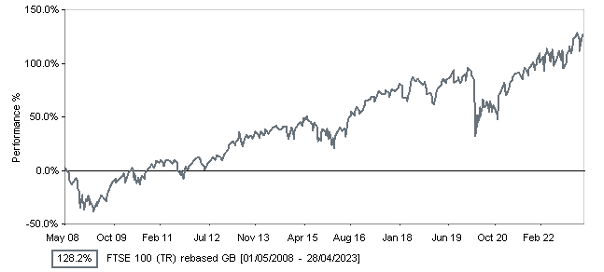
At the beginning of this year the World started to ‘wobble’, set off by the Invasion of Ukraine, and rising murmurs about the likelihood of increased inflation, and with that the threat of rising interest rates.
Share prices in companies around the world quickly started to fall, shortly followed by the never-ending spiral of doom and gloom in the news, creating a continuously depressing stream of information showing the Worlds financial markets were taking a downturn. This all came as a bit more of a shock because of the unprecedented period of cheap money, and constantly increasing share prices everyone had become used to over the last ten years.
After the lockdowns I always maintained you couldn’t just stop the world turning without it eventually to have some sort of effect. It just took a while for it to come out in the wash – and now it has. A lot of the delay between stopping economies working, (and a noticeable effect), was the false security provided by what amounted to the printing and the subsequent handing out of money in many countries, to name but one of many factors that occurred during those crazy times.
Eventually, after the factories were closed and businesses shut, supply chain issues came to light. The backlog of empty production lines had to be dealt with. That, coupled with an imbalance between limited supply and a sudden surge in demand, rising transport costs, plus the knock-on effect of the War in Ukraine, have all resulted in inflation going through the roof.

Traditionally the central banks around the globe try and control inflation with interest rates, and at the moment they are raising them at one of the fastest rates ever seen in a bid to try and stem the current surge in inflation. The worry for next year will be whether they may slow things too much, as these things tend to have a time lag. We can only wait and see. Higher interest rates are not all bad news, as savers normally benefit from interest on their bank deposits, but this isn’t happening significantly to date. When they are being offered, my experience is that the bank will only allow relatively small amounts to be deposited in these savings accounts offering higher rates.
On top of everything already mentioned, other factors also came to a head this year – the UK started to feel a Brexit effect which has weakened overseas investor confidence and taken its toll on trade. Liz Truss’s infamous UK mini-budget caused UK Government Bonds to fall in value like crazy, and what is usually considered a safe haven for many clients and pension funds, took a drastic downturn.
Recessions normally have an effect on employment, but at the moment this looks ok. Interestingly however, if you look at the US, there are an estimated 4m people off work at the moment due to long covid, so figures there are certainly distorted.
So as you will already have gathered, 2022 really hasn’t been a great year!
Living in Spain is such a privilege for many of us. The doom and gloom out there at the moment seems so much more acceptable when you wake up to beautiful weather almost all of the time. The cost of living has risen, but in general terms Spain is still a lot cheaper to live in than the UK.
They say it’s important to count your blessings, and if the fact we live here is one of them, then I for one am looking forward to 2023.
If you fancy an overview of your finances, even if it’s just to reconfirm your plans are all well founded in light of the ever-changing world, please do not hesitate to get in touch.
By John Lansley
This article is published on: 19th December 2022

We are familiar with images of people in deckchairs, equipped with a laptop and a cocktail, brilliant blue sky and sparkling sea in the background, happily working in exotic locations – but how realistic a picture is this here in Spain?
The pandemic has seen huge changes in the way many work, with WFH (working from home, or working remotely) becoming a reality for the lucky millions who were able to do so. The choice of returning to your office or continuing to work from your kitchen table may not always have been yours to make, with employers holding differing views about both supervision and the benefits of having colleagues close at hand.
Whatever the case, for some, WFH continues, perhaps only for a few days a week, but for many their employer doesn’t mind where they are located, as long as the job gets done.
Spain has now joined other countries in offering a specific working visa to those who satisfy the requirements. Since Brexit, many from the UK have seen their dream of moving to Spain shattered by the much tougher visa requirements that now apply. I have written before about the Golden and Non-Lucrative Visas, which favour the wealthy retired, but will this new route provide a real opportunity?
The Digital Nomad Visa is part of new legislation that is designed to encourage business start-ups, to try to improve Spain’s attractiveness to entrepreneurs, and which includes reduced levels of tax for individuals and businesses setting up here.

Let’s look at what we know about the requirements of the new scheme, due to commence in January 2023
So, in practice, this limits access to the visa to those with good educational qualifications or previous professional experience, and who have already been working remotely.
What don’t we know?
However, those lucky enough to qualify will have to be aware that they will in all likelihood become Spanish tax residents, with potential consequences for their employers, tax deductions and national insurance contributions.
But the new digital nomad visa could be a path for you to take if you are keen to move to sunnier climes, experience international work possibilities – carrying only your professional expertise and your laptop, you could be opening the door on a new life!
Moving to Spain is more complicated than ever before, but this new opportunity may help you do so. Obtaining professional help with visas, tax planning, buying a home and investment possibilities is essential, and my colleagues and I will be happy to help, and introduce you to trusted professional partners where appropriate.
By Chris Burke
This article is published on: 23rd November 2022

This month we cover the following topics (if there is anything you would like to understand more or wish to see covered in these articles, don’t hesitate to ask):
Digital Nomad Visa – Update
The Spanish Government has confirmed plans for its digital nomad visa scheme. The scheme will offer citizens from non-European Union countries the opportunity to live in Spain whilst working remotely for companies located outside the country.
The visas will be available for those who derive a maximum of 20 per cent of their income from Spanish firms and who work remotely for companies located outside Spain. The visas should bring vital help to the Spanish economic sector and that it will also help the country recover from the economic damages caused by the Covid pandemic.
Even though there has been no detailed information publicly and the law has not yet been 100% passed through Parliament, it has been publicised that the visas will be initially granted for a period of one year. There will then be the opportunity for this period to be renewed for more than five years, depending on the circumstance of the applicant.
Spain’s Economic Affairs Minister, Nadia Calviño, stressed that “the digital nomad visa will attract and retain international and national talents by helping remote workers and digital nomads set up in Spain.”
In order to benefit from Spain’s digital nomad visa, applicants must be able to show or prove that they have been working remotely for at least a year and be from outside the European Economic Area. They must also show that they hold a contract of employment or, if freelance, prove that they have been regularly employed by a company outside of Spain. Proof that they have enough money to be self-sufficient and have an address in Spain is needed too.
Spain is not the first country in Europe to instigate a Digital Nomad Visa programme. Estonia, Croatia, Portugal and Iceland already have a similar visa scheme, and in January this year the Government of Romania implemented a similar visa.
New Wealth Tax Implemented for those with assets over €3 million
Spain is set to implement a new wealth tax, its second, as the country looks for ways to raise funding to pay for social policies amid soaring inflation.
As reported by Bloomberg, those who have assets worth at least €3 million ($2.9 million) a year from 2023 will be affected, the Budget Ministry said in late September. Payments made against an existing wealth tax will be deductible from the new one, it said.
There are three ranges to the tax:
| Assets | Tax (Payable Yearly) |
|---|---|
| Between €3 and €5 million | 1.70% payable on the value of the assets |
| Between €5 and €10 million | 2.10% payable on the value of the assets |
| Over €10 million | 3.50% payable on the value of the assets |
23,000 people will be affected by the new tax and is expected to raise around 1.5 billion Euros. In 2024 another 204 million is expected to be raised by an increase of up to 2 percentage points on incomes above 200,000 Euros a year. There will be tax reductions for lower earners which is estimated to be worth about €1.88 billion over two years.
New Autonomo Payments from 2023
Self-employed workers (Autonomo’s) in Spain will start paying new monthly social security fees which will be based on the amount they earn. The changes will be brought into force from January 2023.
For those newly self-employed and under the age of 35:
| Time Period | Amount Payable |
|---|---|
| The first 12 months | €60 (80% reduction) |
| Month 13 – Month 18 | €146.97 (50% reduction) |
| Month 19 – Month 24 | €205.76 (30% reduction) |
This flat rate is a measure to promote self-employment that consists of paying a reduced monthly Social Security contribution as a self-employed person for two years.
For those who have been self-employed for two years or more:
| Amount earned per month (€) | 2023 | 2024 | 2025 | 2026 |
|---|---|---|---|---|
| < 600 | €281,50 | €269,30 | €257,00 | €244,80 |
| 600 – 900 | €281,50 | €269,30 | €257,00 | €244,80 |
| 900 – 1.125,90 | €293,90 | €293,90 | €293,90 | €293,90 |
| 1.25,90 – 1.300 | €351,90 | €351,90 | €351,90 | €351,90 |
| 1.300 – 1.500 | €351,90 | €413,10 | €413,10 | €413,10 |
| 1.500 – 1.700 | €351,90 | €413,10 | €474,30 | €474,30 |
| 1.700 – 1.900 | €351,90 | €413,10 | €474,30 | €535,50 |
| 1.900 – 2.330 | €351,90 | €413,10 | €474,30 | €535,50 |
| 2.330 – 2.760 | €351,90 | €413,10 | €474,30 | €535,50 |
| 2.760 – 3.190 | €351,90 | €413,10 | €474,30 | €535,50 |
| 3.190 – 3.620 | €351,90 | €413,10 | €474,30 | €535,50 |
| 3.620 – 4.050 | €351,90 | €413,10 | €474,30 | €535,50 |
| >4.050 | €351,90 | €413,10 | €474,30 | €535,50 |
*Source: Government of Spain
In summary, the current minimum fixed payment of €294 will be changed to a progressive system of 13 instalments, depending on income. This will be introduced over 9 years. It’s important to note that these changes have not yet been finalised and there are still some details to be agreed.
If you would like any more information regarding any of the above, or to talk through your situation initially and receive expert, factual based advice, don’t hesitate to get in touch. You can book an initial consultation via my calendar link below or email/send me a message.
By John Hayward
This article is published on: 21st November 2022

How many years must one work in Spain to claim a Spanish State Pension?
When Brexit finally happened, one of the concerns that I had was regarding the bilateral agreement between the UK and Spain. I wanted clarification on whether years worked in the UK would continue to count towards the years required to qualify for the Spanish State Pension. The minimum number of years in the UK is 10 years but in Spain it is 15 years. Under the Trade and Cooperation Agreement made between the EU and the UK on 24th December 2020, and specifically the Article SSC.7: Aggregation of periods, it states that the periods of employment must be considered “as though they were periods completed under the legislation which it applies”.
How does this work in practice?
If someone has worked for 9 years in the UK and 14 years in Spain then, under the individual countries’ rules, neither minimum has been achieved. However, both countries’ rules are satisfied when adding the 9 to the 14 and vice versa. That is not to say that one would receive 23 years’ pension from either or both countries but merely that the person qualifies for a pension in both countries; 9 years’ pension in the UK and 14 in Spain. Details of how the pension is calculated can be found in my colleague Chris Burke’s article Claiming your UK State Pension whilst living in Spain/EEA.

Can you continue working in Spain whilst claiming a Spanish State Pension?
In the UK, you can receive your State Pension and continue to work. You will then only pay Class 4 National Insurance contributions, those associated with profit, as no further pension benefit will be accumulated. In Spain, you cannot claim your full State Pension entitlement if you continue working, and you do not employ anyone. However, it is possible to continue working beyond Spanish State Pension age and claim a reduced pension subject to certain conditions, one of these being that you must have achieved the minimum number of years to claim 100% of the Spanish State pension. This is currently 35 years but will be increasing over the next few years. You can once again apply the principle as discussed above in terms of adding the years in the UK to achieve this minimum.
To find out what your options are and how we can help you with your retirement planning, please contact me at john.hayward@spectrum-ifa.com or call/WhatsApp me on (0034) 618 204 731.
By Jeremy Ferguson
This article is published on: 21st November 2022

Over the years I’ve been living and working in Spain with retired expats, one of the issues that very often comes to light is finding things to do, and making new friends. For the avid golfers among you, that may not be a problem, but for many others it can be.
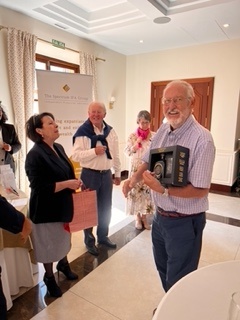
We have recently started supporting the Benahavis Arts Society, who not only organise Talks in Benahavis once a month, but interestingly, they are also organising regular trips to places of interest in and around Andalucia, as well as other planned social events.
If you are looking to make new friends, and explore Andalucia, then this may be for you. There are planned trips to The Malaga Christmas Lights on the 9th of December, a Christmas Lunch of the 15th of December, and a pub quiz on the 19th of January next year. Non-members are welcome, and more details can be found on their website at; www.theartssocietybenahavis.com

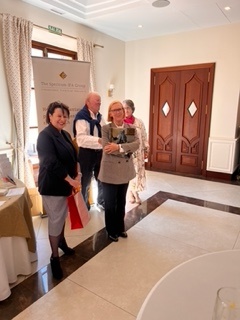
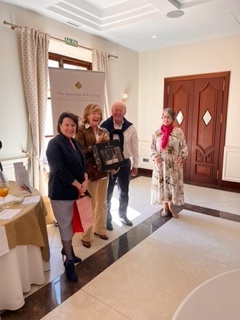
As can be seen from the write up below, the most recent trip to Antequera was a huge success:
“With the guidance of Miranda, our excellent tour operator, we started our day driving through stunning scenery including the extensive rich farmlands in the valleys around the city and the imposing Pena de Los Enamorados (Lovers Leap); a distinctive face-shaped mountain from a romantic legend that overlooks the town and dominates the landscape.
On arrival at the top of the city, we started our historical walking tour with a local guide. This included the majestic Alcazaba; the centuries old Moorish fortress and the beautiful Colegiata with its superb façade. We visited the municipal museum with its many artefacts tracing Antequera’s extensive archaeological history and the splendid renaissance style church of Parroquia San Sebastian.
We then had free time to explore the city further and take in a delicious lunch at one of the delightful tapas restaurants around the central square.
The spectacular cultural heritage site of the Dolmens was the destination for our afternoon visit. These bronze age burial grounds built with huge megaliths are nothing short of impressive. Inside, the chambers are magnificent and clearly show the scale of the architectural and engineering feat required to build them.
The whole day was truly delightful with something for everyone. It was very well planned and organised, with highly knowledgeable and personable guides, various pick-up locations and brief stops on the way there and back for refreshments. I would particularly like to thank Miranda, Betty and Tracey for looking after us so well but also the whole group who were so incredibly welcoming.”
Working with clients in the Costa Del Sol and helping with their financial planning and tax matters has meant I get involved in so many other areas of people’s lives, this being just one great example.
If you would like to find out more about how we can help you not only make sure your financial world is in order here, but also integrate into life here in Spain, please feel free to get in touch for a chat.
By David Hattersley
This article is published on: 17th October 2022

A sense of deja-vu is now apparent as the UK is experiencing a similar situation compared to the 70’s. Drawing comparisons especially for those that lived through that era would be unhelpful. However a minor point worth considering were the restrictions on the flow of capital out of the UK. For those lucky enough to travel abroad then a limit of £25.00 cash per person was the restricted limit under the Exchange Control Act 1947. My wife still has her old passport with form PP/A dated 14.02.73. One of her clients of 100 years still remembers how difficult it was to bring money into Spain to buy a plot of land.
For those that already are living in Europe or plan to in the very near future under the golden visa rules, I am not suggesting a wholesale restriction of capital movement . A difference though between the 70’s and now is the growth in personal wealth, with the primary asset being property. The 2nd biggest asset and perhaps underrated was the growth of money purchase pensions after Mrs Thatcher came to power and for those in their 50’s & 60’s this could be quite considerable. The opportunity to “ distance work “ may have an impact on younger professionals and for those relocating here.
The current government is under extreme pressure, especially the need to raise tax revenue to balance the books, along with the alleged reports of threats to tear up all agreements with Europe.One politically “safe option” and unlikely to cause uproar and outrage by the general public would be to curtail or even stop transfers to a QROP for those lucky to live or move to Europe.

Why would the government do this ? The payment of a pension held in the UK could be taxed at source as are the current Civil Service Pensions, thereby retaining the long-term tax revenue stream. It would mean filing tax returns both in the UK & Spain. The pension commencement lump sum could also come under review. There certainly wouldn’t be a public outcry for those “ lucky” enough to have sizeable pension pots.
The UK Budget Bill normally has to be debated and passed into law which takes about 3 months. In 2015 negative amendments were made to the QROPs rules that took effect immediately on the day after the budget and was quietly “slipped in”. A case of “ the devils always in the detail”! After all the principle of if one can get away with it once, why not try to repeat a similar process again?
There are many advantages in transferring to a QROPs and at The Spectrum IFA Group we offer and recommend a thorough assessment and report of your individual situation by our qualified specialist at no cost to you. An additional benefit is the long-term service provided as UK based advisers can no longer provide this for residents in Spain and the individual can retain control via a local adviser. A transfer to a QROP doesn’t only apply to UK nationals but any European worker that has built up a “pension pot”. I have been heavily involved in the pensions market since 1987 and have a wealth of experience in this field so if you have any concerns or interest please contact me to arrange a no-obligation initial meeting.
e.mail : david.hattersley@spectrum-ifa.com
Telephone or Whats App : 0034 711 051 938