In my experience working with expats, many people take action too quickly—moving money, changing investments, or relying on advice that doesn’t fully consider the Spanish tax system.
Before you do anything with your investments, here are the key things you need to understand.
1. Your Financial World Has Changed Overnight
The moment you become a Spanish tax resident, the rules shift.
Spain doesn’t just tax income earned locally—it can tax your worldwide income and assets. At the same time, if you’re from the US or UK, you may still have obligations back home.
This creates a cross-border planning challenge, and decisions that made sense before you moved may no longer be efficient—or even compliant.
2. Your Existing Investments May No Longer Be Suitable
One of the biggest issues I see is expats holding investments that are perfectly fine in their home country—but problematic in Spain.
For example:
– Portfolios designed for UK tax rules may be inefficient in Spain
– Certain US-based investments can create complex tax reporting issues
– Income-producing assets may trigger higher annual taxation than expected
This doesn’t mean you need to change everything—but it does mean you should review before reacting.
3. Income vs. Tax Efficiency: A Common Trap
Many people arrive in Spain and think:
“I’ll just draw income from my portfolio.”
The problem is that in Spain, how income is generated matters just as much as how much you take.
Unstructured withdrawals can lead to:
– Higher annual tax bills
– Reduced long-term growth
– Unnecessary complexity
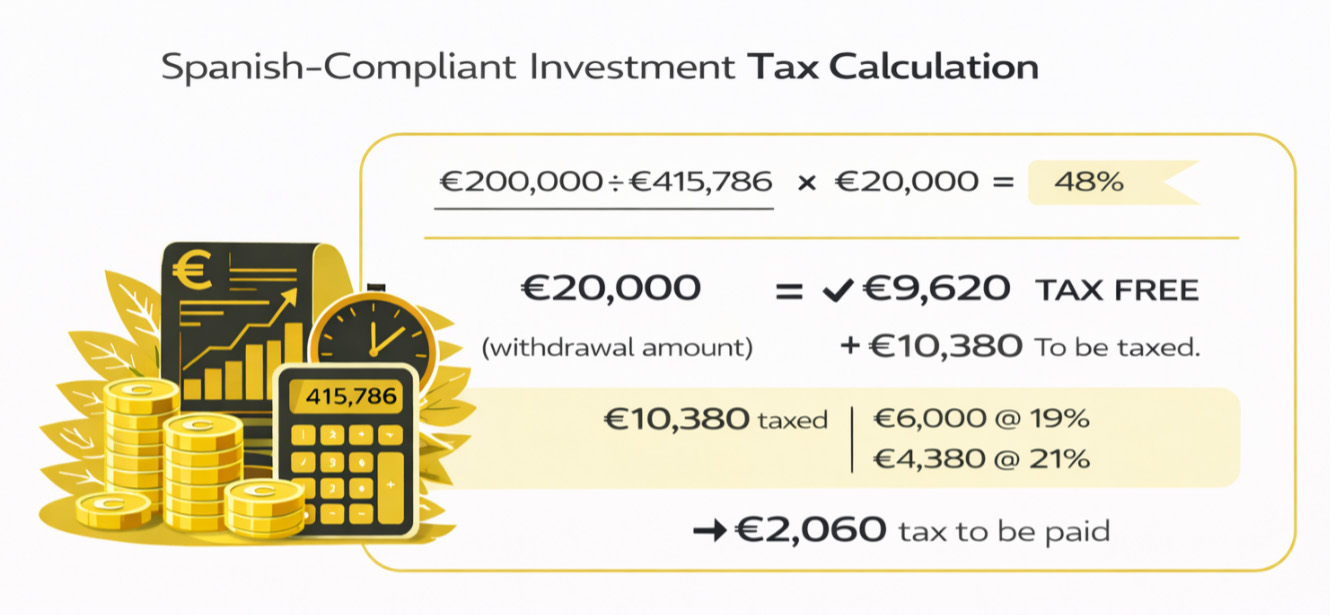
With the right structure, income can often be taken more efficiently—but that requires planning before changes are made.
4. Wealth Tax Is Often Overlooked
Depending on where you live in Spain, your assets—not just your income—may be taxed each year.
In regions like Valencia, this can apply once your net assets exceed certain thresholds.
What matters here is not just how much you have, but:
– How assets are held
– How they are valued
– How they evolve over time
Small structural differences can have a meaningful impact over the long term.
5. The Biggest Mistake: Acting Too Soon
It’s natural to want to “get organised” as soon as you arrive.
But the reality is:
The first 6–12 months are a planning window, not an action window.
This is the time to:
– Understand your new tax position
– Review your existing investments
– Align your strategy with Spanish rules
Rushed decisions during this period are often the ones that need to be undone later—sometimes at a cost.
6. Not All Advice Is Equal
More people are now turning to online sources and AI for financial guidance. While this can be helpful for general understanding, it often lacks the detail needed for cross-border situations.
I’ve seen individuals make decisions based on incomplete or generic advice, only to face:
– Unexpected tax liabilities
– Non-compliant investment structures
– Avoidable complexity
Financial planning between countries requires personalised advice—tailored to your specific situation and aligned with both tax systems.